
Christian Bretton-Meyer, Morten Steen Hebsgaard, Søren Petersen, and Tommy Petersen met over two decades ago at the Royal Danish Academy of Fine Arts. They soon decided against individual careers, opting instead to form A Kassen, a collective based between Berlin and Copenhagen.
The collective also chose not to be confined by specific disciplines, engaging in sculpture, performance, photography, and architectural explorations. They describe their works as “installations and performative sculptures.” Initially, they deconstructed and reconstructed everyday objects, other artists’ works, and traditional exhibition practices to challenge conventional display methods. Throughout their evolution, they have retained a sense of humor, a post-conceptual approach, and a commitment to establishing subtle relationships between artworks, documentation, and spaces, often through site-specific interventions.
They frequently dismember replicas of ancient statues, treating the material solely for its abstract potential, often concealing figurative motifs by embedding them in walls. They have been known to completely destroy Venus figures or transform titans into cobblestones.
Their process often involves deconstructing a painting or a place, or challenging the viewer’s perception by destabilizing it. At other times, they have sought to maximize the expressiveness of materials, particularly metals, by embracing chance. Bronze has been central to their work; in its handling, they allow the power of fire and heat to leave a more significant mark than traditional metallurgical techniques, which would typically aim for solidity and smoothness.
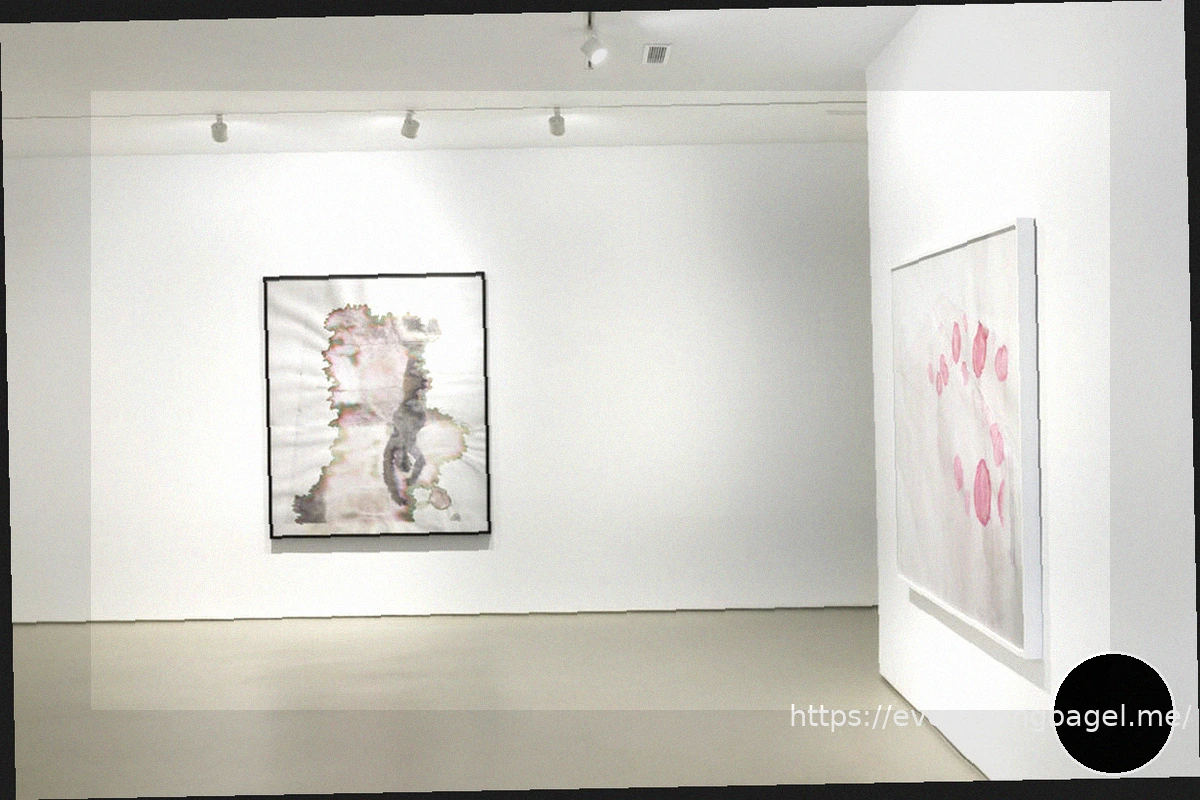
At Maisterravalbuena, their Madrid gallery, their “bronze paintings” have been exhibited, created using the less common sand-casting technique. In this process, molten bronze is poured over a bed of mixed sand and clay where desired forms have been pre-modeled. As it solidifies, the material creates cavities, splashes, and oxidations of various hues, once again highlighting how time itself contributes to the artistic creation.
Their recent exhibition, “Twenty minutes past two,” features everyday objects such as clocks, administrative documents, and regular paving, which typically symbolize stability and certainty. A Kassen transforms them into sources of doubt and quicksand, altering their original functions to question their inherent reliability.
Absurdity can permeate these notions of stability through unexpected failures or accidents, which are then treated with gravity. Spontaneity is also key; words can transcend their documentary function to become instant watercolors.
The collective wields strangeness and anomaly as powerful tools against systems designed for infallibility. They propose viewing error as an intermediate state that deviates from the functionalism and productivity of regulated environments, thus evoking a comedic sense from nearly everything that appears out of place.
In this exhibition, clarity eludes us, while what is typically destined to disappear (deviations and irregularities) endures. The unusual becomes a central possibility, rather than a marginal option.