

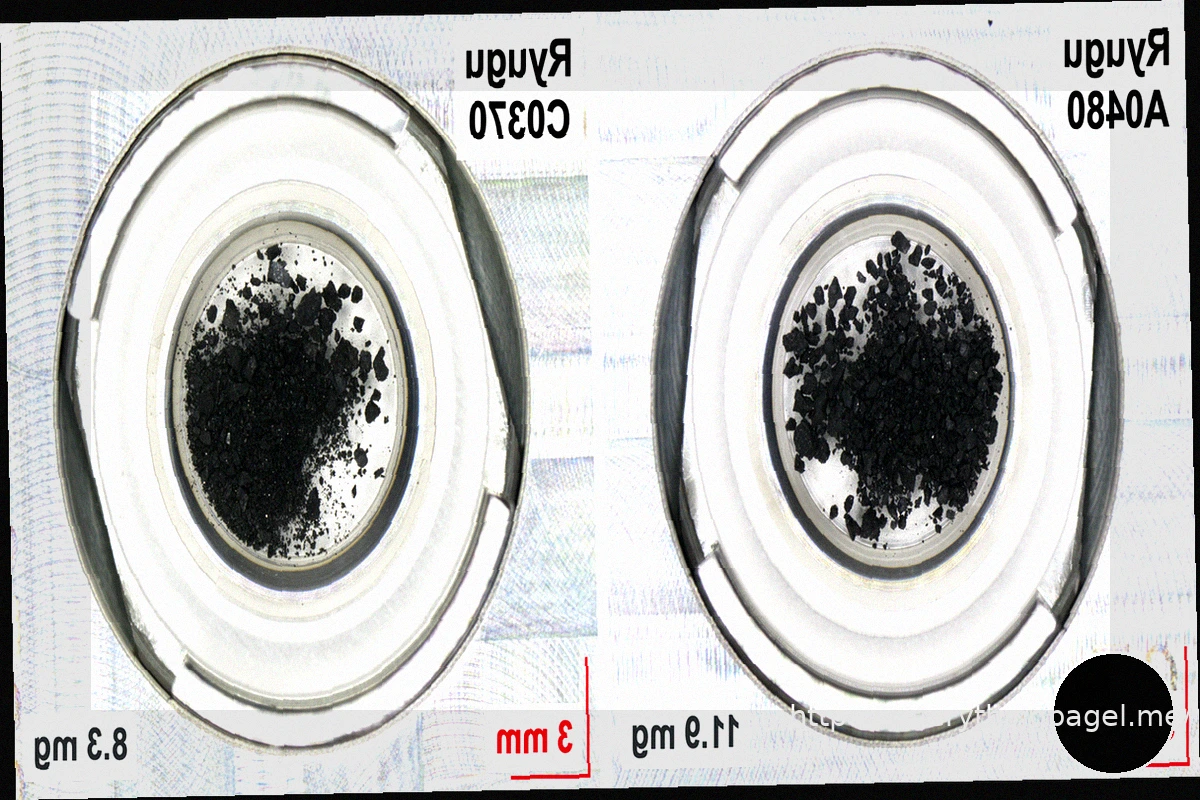
Samples from the Ryugu asteroid, brought back to Earth by the Japan Aerospace Exploration Agency’s (JAXA) Hayabusa2 mission, have been found to contain all five nitrogenous bases crucial for life: adenine, guanine, cytosine, thymine, and uracil. These are the fundamental components of nucleic acids, DNA and RNA, which store and transmit genetic information in terrestrial organisms. The findings, published in the journal Nature Astronomy, indicate that these vital molecules are present in the asteroid material in similar proportions to each other.
This discovery holds significant importance because the Ryugu samples were collected directly from space and returned to Earth under controlled conditions, minimizing the risk of contamination. This allows for the study of organic compounds formed in extraterrestrial environments, free from the influence of terrestrial biological processes. While previous analyses had identified some nitrogenous bases, such as uracil, this new study expands the scope by confirming the presence of the entire set of canonical bases.
Nitrogenous bases are categorized into two groups: purines (adenine and guanine) and pyrimidines (cytosine, thymine, and uracil). The discovery of all five within a single asteroid suggests that life’s fundamental building blocks can form even in non-biological environments. This strengthens the hypothesis that complex organic molecules were widespread in the early Solar System and could have been delivered to Earth via asteroid and meteorite impacts.
Comparison with Meteorites and Other Asteroids
In this new study, researchers analyzed two distinct Ryugu samples, detecting all five nitrogenous bases in both. These findings were then compared with results from well-studied meteorites, such as Murchison and Orgueil, as well as with samples from the asteroid Bennu, returned to Earth in 2023 by NASA’s OSIRIS-REx mission.
The comparison revealed differences in the relative abundances of the nitrogenous bases. In Ryugu samples, purines and pyrimidines are present in similar quantities. The Murchison meteorite, however, exhibits a higher abundance of purines, while samples from Bennu and the Orgueil meteorite are richer in pyrimidines. These variations suggest that despite originating from similar chemical processes, different celestial bodies underwent distinct evolutionary paths.
According to the study’s authors, these variations are linked to the physical and chemical conditions of the parent bodies, such as the presence of ammonia and other compounds. Specifically, the analyzed samples show a correlation between the purine-to-pyrimidine ratio and the amount of ammonia, suggesting that the chemical environment influenced the formation of the nitrogenous bases.
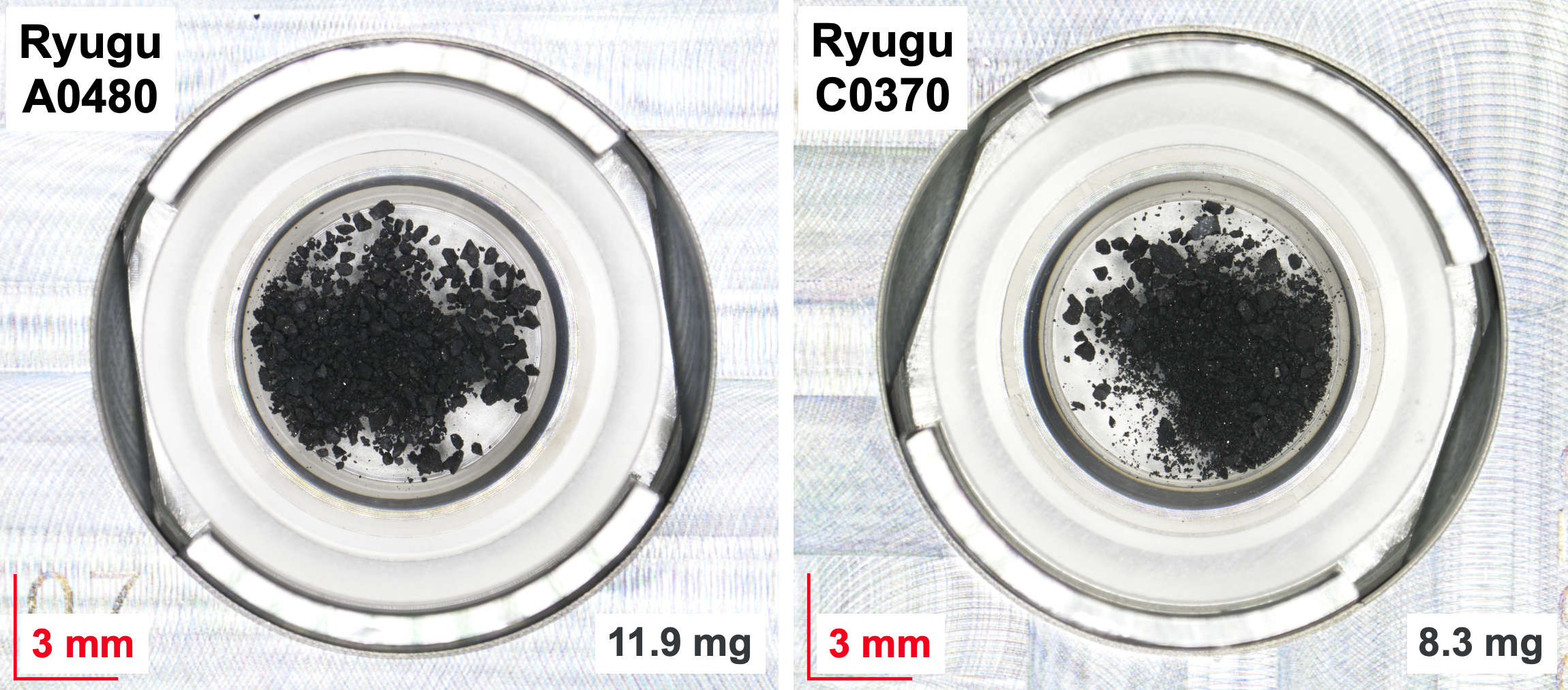
These findings indicate that organic molecules do not form uniformly across space but are dependent on their local context. Simultaneously, they demonstrate that the processes leading to the formation of nitrogenous bases might be common across various objects in the Solar System.
Implications for the Origin of Life
The presence of all nitrogenous bases in a carbonaceous asteroid like Ryugu strengthens the hypothesis that life’s fundamental building blocks are prevalent throughout the Solar System. In this scenario, asteroids would have played a role in transporting organic molecules to early Earth, thereby contributing to the chemical inventory essential for the subsequent development of life.
The concept that complex organic compounds can form in space is not new, but results like these provide increasingly robust direct evidence. The discovery of these molecules in uncontaminated samples allows for a more reliable study of chemical processes occurring beyond Earth.
Furthermore, the comparison between Ryugu, Bennu, and meteorites suggests that the formation of nitrogenous bases might follow shared chemical pathways, albeit modulated by local environmental conditions. This implies that life’s building blocks could have formed in numerous diverse locations across the Solar System, rather than in isolation.
Overall, the study demonstrates that nitrogenous bases are likely widespread in space. Their presence in asteroids and meteorites supports the idea that prebiotic chemistry is not exclusive to Earth but rather part of a broader process encompassing the entire Solar System.