From Friedrich to Lazkano: Glaciers, Art, and the Unfolding of Time
Two centuries ago, in 1824, Caspar David Friedrich created "High Mountain Region." This masterpiece, later exhibited in his beloved Dresden, was sometimes titled "High Mountain Region, based on a drawing by Professor Carus." The majestic peaks surrounding Chamonix's Mer de Glace served as the inspiration for this work. However, its original form is known only through period photographs, as its history has been anything but serene: it resided in the Neue Nationalgalerie's collections from the 1920s to the 1940s before being moved to an anti-aircraft bunker, which was subsequently abandoned, incinerated, and plundered towards the end of World War II.
It is believed that the aforementioned Carus, a physician and friend of Friedrich, created a copy of this landscape on a canvas slightly larger than the original, now housed at the Museum Folkwang in Essen. Carus's authorship isn't entirely clear given the broader context of his artistic output. What is certain, however, is that Friedrich, who rarely traveled, never visited this specific region. It was Carus, in fact, who made the journey in 1823, sketching the scene that is thought to have inspired the Romantic painter.
The intricate journey of this artwork and its various copies has become a profound obsession for Jesús María Lazkano, an artist from Gipuzkoa. Lazkano himself is known for creating evocative landscapes, often featuring abandoned industrial structures but deliberately omitting human figures, thereby cultivating an atmosphere of mystery and quiet contemplation.
Natura fugit. Jesus Mari Lazkano. Museo Universidad de Navarra
Natura fugit. Jesus Mari Lazkano. Museo Universidad de Navarra
In recent years, Lazkano has frequently revisited this historical scene, developing numerous alternative interpretations. He ultimately opted to superimpose the version attributed to Friedrich (known through historical photographs) with the supposed Carus painting from Essen. Furthermore, to imagine how a 19th-century traveler might have perceived the Chamonix mountains, he studied an S. Thompson woodburytype and an Adolphe Braun stereoscopic photograph. He even experienced the latter through an antique wooden stereoscope, manufactured by the Underwood & Underwood brothers, which is preserved at the Museum University of Navarra.
For Lazkano, engaging with this landscape by integrating concepts of time and motion proved significantly impactful. This inspired him to embark on his own cinematic response to "High Mountain Region," an audiovisual project that ultimately became the genesis of his exhibition, "Natura fugit," now presented in Pamplona.
The exhibition's title, "Natura fugit" (Nature Flees), underscores the Vergara-born artist's profound interest in the effects of centuries passing on the landscape. These changes are inextricably linked to shifts in climate, which can be either subtly influenced or dramatically accelerated by human actions. Lazkano posits that both painting and cinema offer opportune mediums to convey messages of sustainability to audiences, who might otherwise tune out such crucial information when presented through oversaturated digital screens.
Lazkano visited the Mer de Glace in the 1980s. He openly admits that comparing his recollections from that time with the glacier's current state evokes a deep sadness. The glaciers are visibly receding at an alarming rate; over the mere four years this project encompassed, its height decreased by four meters (a staggering loss of over one hundred meters since Friedrich's era).
Natura fugit. Jesus Mari Lazkano. Museo Universidad de Navarra
Natura fugit. Jesus Mari Lazkano. Museo Universidad de Navarra
Natura fugit. Jesus Mari Lazkano. Museo Universidad de Navarra
The exhibition, currently on display at the MUN and curated by Valentín Vallhonrat and Ignacio Miguéliz, features a twenty-minute animation film. It also showcases the extensive graphic materials utilized throughout the creative and production process of the artwork. Presented directly to the public, without hierarchy, are the intermediate elements that shaped the piece alongside the final result. This allows visitors to gain firsthand insight into the artistic journey, including its breakthroughs and challenges, through sketches, notes, notebooks, storyboards, reproductions, and copies. Furthermore, the exhibition delves into Lazkano's profound research, revealing that this very landscape previously captivated figures such as William Turner, Ruskin, Viollet le-Duc, and the Lumière brothers, and has been extensively studied by scientists, with glaciologist Eñaut Izagirre offering Lazkano novel perspectives.
The Gipuzkoan artist's ambition was considerable: "To traverse its topography, experience time on the ground, and begin with drawings, watercolors, photographs, videos… so that, building upon this prior on-site experience and its derived graphic materials, I could then embark on a process of 'reconstruction' of a possible future reality."
The film itself overtly reveals its production methods: pastel drawings transition seamlessly, each corresponding to a single frame, with the camera occasionally moving within them to create fluid, cost-effective tracking sequences. Ultimately, Lazkano proposes a gaze that layers multiple timescales: the present from which we observe the landscape today; the cultural time these glaciers have accumulated, having been widely studied, painted, and photographed as a historical landmark; and the vast geological time, which is largely unfathomable on a human scale. "Natura fugit" thus immerses us in a landscape that was once profoundly romantic and now appears to be on the verge of vanishing.
Natura fugit. Jesus Mari Lazkano. Museo Universidad de Navarra
Natura fugit. Jesus Mari Lazkano. Museo Universidad de Navarra
Fresh materials — Culture News
Isabel I y Juana I, reinas de Castilla: historia y mito
Isabel I y Juana I, madre e hija y soberanas de Castilla, representan trayectorias notablemente distintas en su interacción con el poder real. Isabel ascendió al trono en un período de grandes desafíos y gobernó con una determinación transformadora. Impulsó la unificación religiosa, la expa
Job Opening: Head of Education at Artium Museoa, Vitoria
Artium Museoa, located in Vitoria, is currently seeking a dedicated and experienced Head of Education to join its team. Reporting directly to the Chief Curator and the Museum Director, the Head of Education will be responsible for proposing, designing, producing, and successfully im
Tabakalera & Chillida Leku Artist Residency 2026: Art & Landscape Open Call
Tabakalera and Chillida Leku are pleased to announce the call for their 'Art and Landscape 2026' artist residency program. This initiative aims to foster artistic creation and research at the dynamic intersection of contemporary art, public space, and the natural landscape. This residency
Head of Exhibitions at Museo Reina Sofía
The Museo Nacional Centro de Arte Reina Sofía (MNCARS) has launched an open recruitment process for a permanent Head of Exhibitions position. This staff role, which falls outside the scope of collective bargaining agreements, is directly attached to the Artistic Sub-directorate. The selection
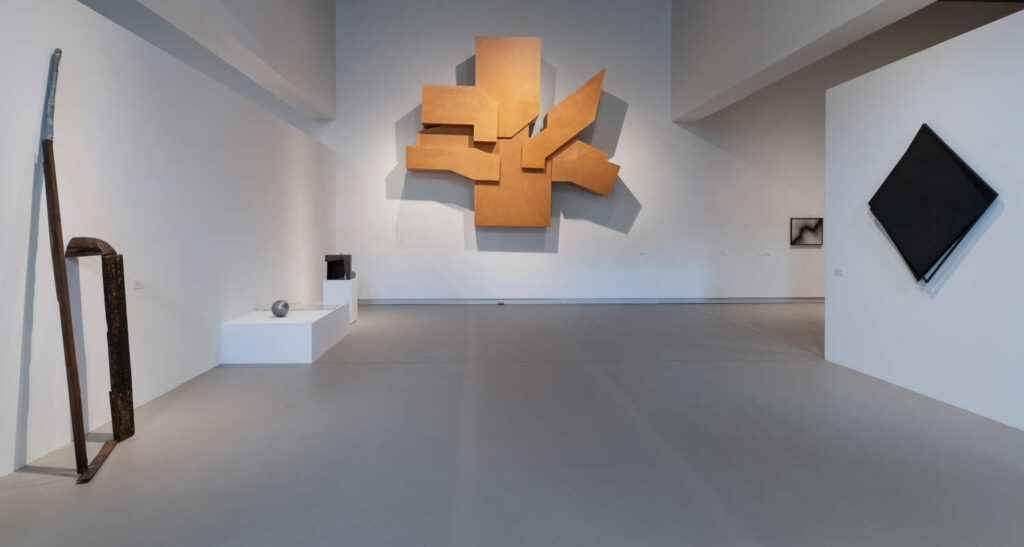
Miroslaw Balka's "The Forgotten"
The Elba Benítez Gallery is currently hosting an exhibition of new works by Miroslaw Balka, titled "The Forgotten," which will run until May 8, 2026. The show primarily features sculptures and drawings that explore themes of memory and oblivion from personal, social, and archetypal perspectives
Rose Wylie: Image Over Subject Matter
The Royal Academy of Arts in London is currently hosting the most extensive retrospective to date of British artist and Royal Academician, Rose Wylie. The exhibition runs until April 19th. Celebrated for her bold figurative style, which draws inspiration from art history, ancient civiliza