Tracey Emin's My Bed: A Raw Biography and Enduring Spectacle in Art
Over a quarter-century ago, Tracey Emin's installation My Bed ignited widespread controversy and astonishment upon its nomination for the prestigious Turner Prize in the UK in 1999. Although filmmaker Steve McQueen ultimately won, Emin's unmade, dirty bed captivated public attention and provoked considerable outrage.
At that time, Emin was a prominent member of the Young British Artists (YBA) collective, exhibiting alongside figures like Damien Hirst, Chris Ofili, and the Chapman brothers. These artists were known for pushing the boundaries of artistic disciplines and challenging conventional methods of presenting and selling art. Emin, in particular, benefited from the financial and promotional backing of gallerist Charles Saatchi, a key catalyst in Britain's vibrant creative scene.
Channel 4 dedicated a program to the supposed "death of painting" and invited Emin to participate. Her appearance was brief and unmeasured, reportedly due to her state at the time, leading her to confess the next day that she remembered nothing. Despite this, the public and critics certainly remembered the incident long-term, though not always negatively. Emin received more interview invitations, and her work sold successfully. My Bed was promptly acquired by Saatchi himself, who owned it until 2014, when a German industrialist purchased it for over £2.5 million. The artwork is currently part of the Tate Modern's "A second life" exhibition (running until August 31, 2026).
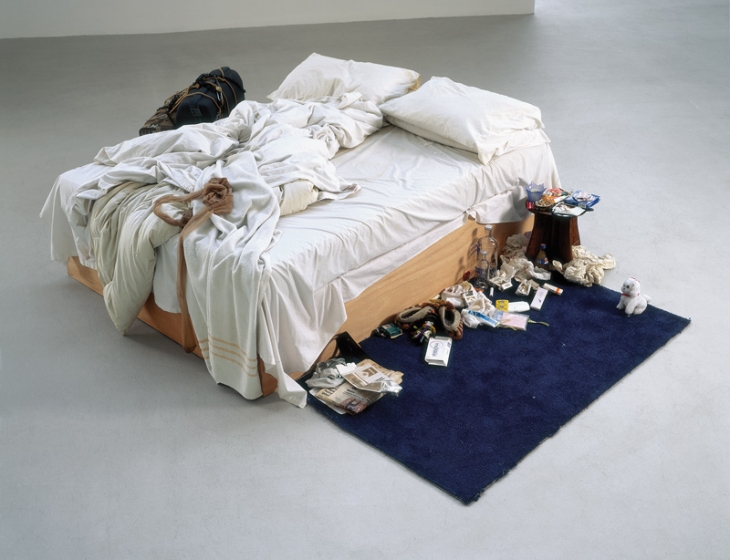
The installation features Tracey Emin's actual bed, with crumpled, soiled sheets, surrounded by an array of intimate personal items: slippers, vodka bottles, cigarette butts, used tissues, condoms, underwear, a stuffed toy, empty cream tubes, and overflowing ashtrays.
Far from a place of rest, it represents a different kind of intimacy—sordid and emblematic of a particularly dark period in the artist's life, marked by alcoholism, violence, sex, and self-destruction. It might evoke curiosity or even compassion, but rarely a desire for closeness. The sheer filth of the piece shocked audiences because, in the 1990s, such squalor was largely absent from fine art. While Piero Manzoni's Artist's Shit dated back to 1961, that abject material remained safely sealed in a can, preventing any sight or smell from disturbing the viewer. Emin, however, confronted us directly with the grime.
Before its Turner nomination, My Bed had been exhibited in Japan and New York. Prior to its showing in England, it had to be partially reconstructed as some objects were lost or damaged during transit. Similar issues arose in subsequent exhibitions, leading to all its components being meticulously cataloged and individually stored in aseptic plastic bags for years. Although these are common, easily replaceable items, each presentation of the work imbues them with a unique aura, akin to museum artifacts. However, as critic Jonathan Jones observes, over time, the piece has evolved: it no longer reflects the artist's immediate personal state but rather embodies the memory of a past intimate and creative moment. In Jones's words, "Instead of a furious document of 90s bad-boy art, it is now a strange, preserved time capsule, the memory of past binges. The Pompeii of the bohemian avant-garde."
In an interview with fellow gallerist Carl Freedman, Emin recounted the genesis of My Bed: she had spent days away from home, drifting from bar to bar, spiraling towards disaster. Upon her eventual return, she slept for two consecutive days before waking up to get water. Her view of the bed after returning from the kitchen is what she recreated in this artwork. Initially, she thought she might have died there; then, stepping back, she perceived a form of beauty within the scene.
My Bed was far from Emin's first work with biographical echoes. Since her first solo exhibition in 1993, virtually all her creations have been deeply intertwined with her personal life. Her installations, films, drawings, and writings often reference her depressions, adolescence, experiences of sexual violence, relationships, addictions, and family dynamics.
In 1995, she even conceived a self-titled museum solely dedicated to her own experiences. Her life and work, the mundane and its artistic representation, were entirely fused. The bedroom motif was also not new to her career: in 1996, she presented Sleep, a pillow painted with drawings and words. In 1997, she exhibited Everyone I Have Ever Slept With 1963–1995 at the Royal Academy, a tent embroidered with the names of all the people she had shared a bed with. Later, in 2002, she created the installation To Meet My Past, featuring a mattress with bedding and a canopy draped with curtains, onto which she had stitched slogans like the piece's title or "Please God don't do this to me."
While it's tempting to categorize My Bed as a ready-made, it doesn't align with the same definition. Its constituent objects are deeply personal, not merely "found" items, and each carries its own story; they are not devoid of value or symbolism. Furthermore, its presentation aims for a theatricality that transcends the simple act of placing an everyday object in a museum. Instead, all the elements combine to form an unashamed tableau of decay.
Fresh materials — Culture News
Isabel I y Juana I, reinas de Castilla: historia y mito
Isabel I y Juana I, madre e hija y soberanas de Castilla, representan trayectorias notablemente distintas en su interacción con el poder real. Isabel ascendió al trono en un período de grandes desafíos y gobernó con una determinación transformadora. Impulsó la unificación religiosa, la expa
Job Opening: Head of Education at Artium Museoa, Vitoria
Artium Museoa, located in Vitoria, is currently seeking a dedicated and experienced Head of Education to join its team. Reporting directly to the Chief Curator and the Museum Director, the Head of Education will be responsible for proposing, designing, producing, and successfully im
Tabakalera & Chillida Leku Artist Residency 2026: Art & Landscape Open Call
Tabakalera and Chillida Leku are pleased to announce the call for their 'Art and Landscape 2026' artist residency program. This initiative aims to foster artistic creation and research at the dynamic intersection of contemporary art, public space, and the natural landscape. This residency
Head of Exhibitions at Museo Reina Sofía
The Museo Nacional Centro de Arte Reina Sofía (MNCARS) has launched an open recruitment process for a permanent Head of Exhibitions position. This staff role, which falls outside the scope of collective bargaining agreements, is directly attached to the Artistic Sub-directorate. The selection
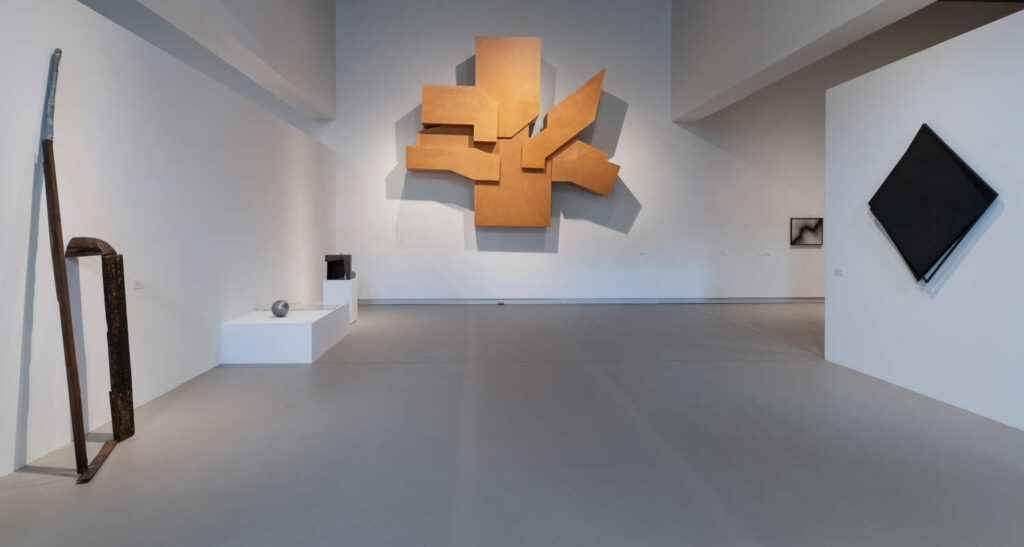
Miroslaw Balka's "The Forgotten"
The Elba Benítez Gallery is currently hosting an exhibition of new works by Miroslaw Balka, titled "The Forgotten," which will run until May 8, 2026. The show primarily features sculptures and drawings that explore themes of memory and oblivion from personal, social, and archetypal perspectives
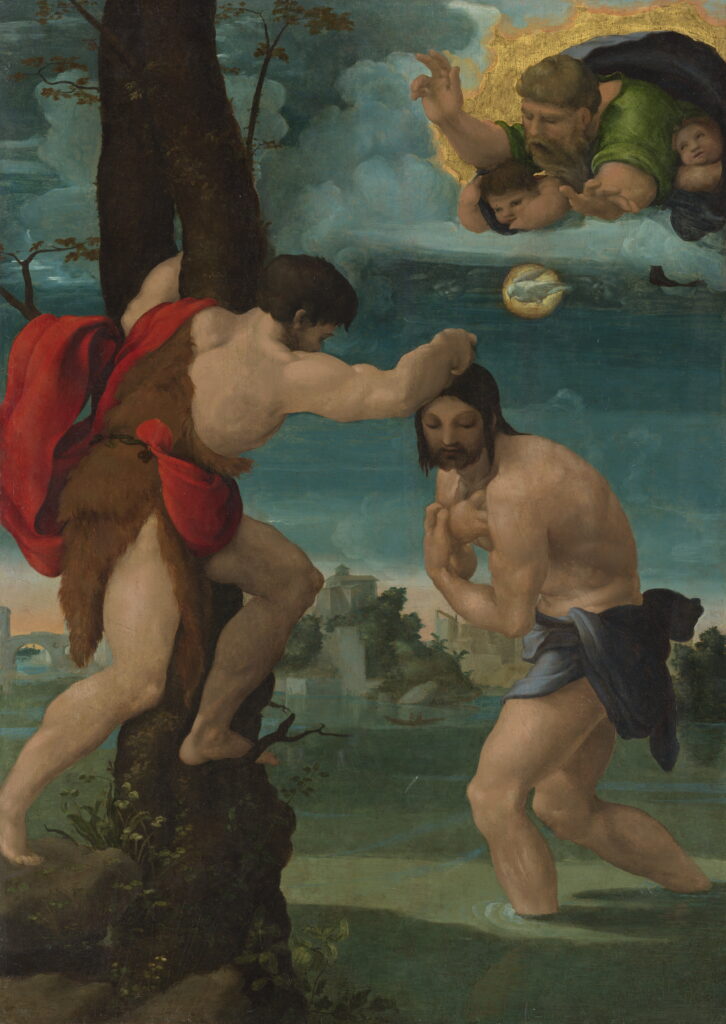
Rose Wylie: Image Over Subject Matter
The Royal Academy of Arts in London is currently hosting the most extensive retrospective to date of British artist and Royal Academician, Rose Wylie. The exhibition runs until April 19th. Celebrated for her bold figurative style, which draws inspiration from art history, ancient civiliza