

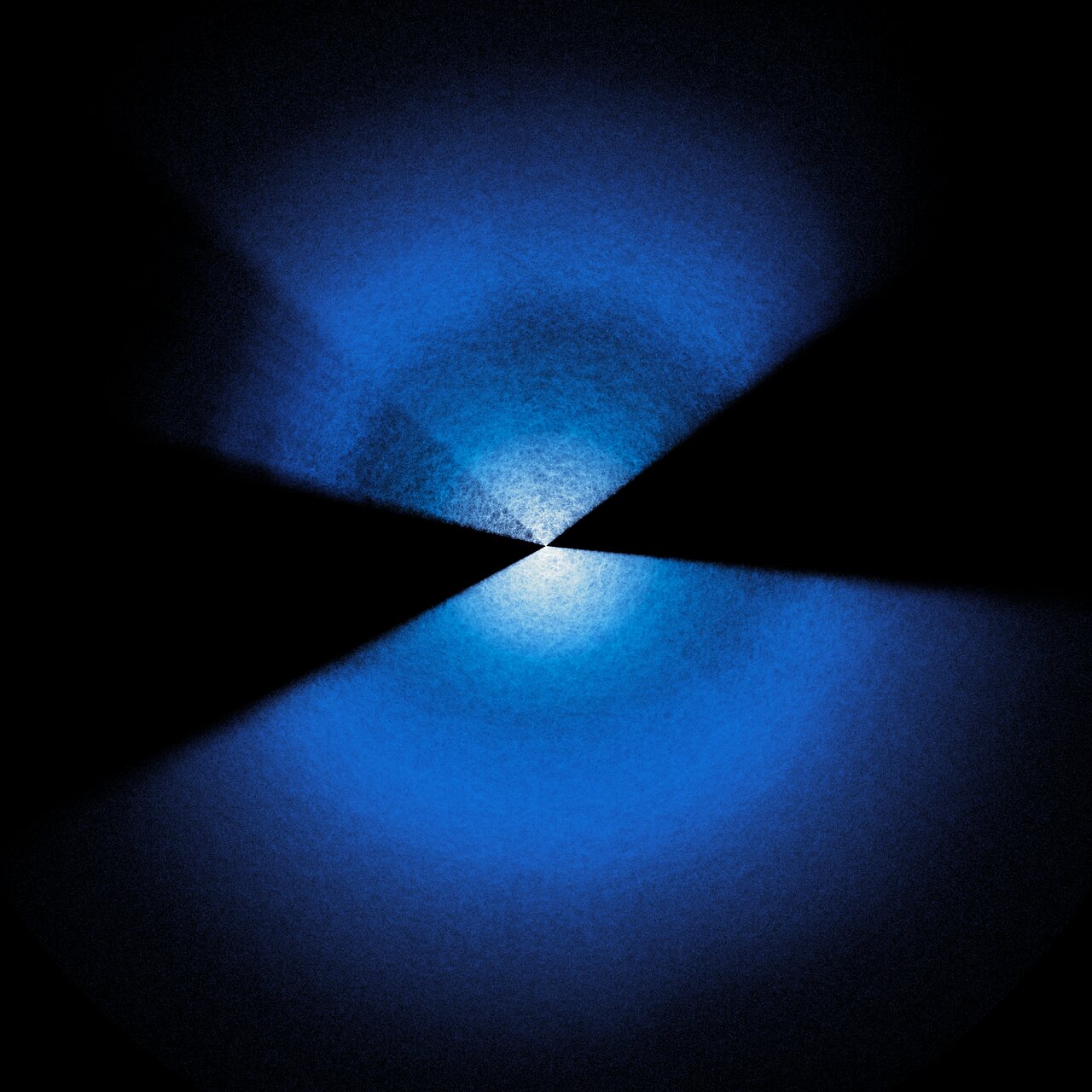
The Dark Energy Spectroscopic Instrument (DESI) has achieved a significant milestone, completing the most extensive and high-resolution three-dimensional map of the Universe ever created. Over its five-year observation period, DESI has cataloged over 47 million galaxies and quasars, far exceeding the initial goal of 34 million. This accomplishment provides a detailed reconstruction of large-scale matter distribution, enabling scientists to study the evolution of the cosmos over the past 11 billion years.
Installed on the 4-meter Mayall telescope at the Kitt Peak National Observatory in Arizona, DESI employs 5,000 optical fibers that automatically point to distant celestial objects. Every 20 minutes, the instrument captures light from galaxies and quasars, allowing for the measurement of their distances and the construction of a 3D map. This type of observation is crucial for investigating the nature of dark energy, the mysterious component believed to constitute approximately 70% of the Universe and drive its accelerated expansion.
The data collected by DESI represents a substantial leap forward compared to previous cosmological surveys, with the number of observed objects being approximately six times greater than all previous surveys combined.
A Map to Study Dark Energy
DESI’s primary objective is to understand how dark energy has influenced the expansion of the Universe over time. By comparing the distribution of galaxies at different cosmic epochs, researchers can reconstruct how matter has aggregated and how this evolution has been shaped by the presence of dark energy.
Initial results from the first three years of observations have already yielded intriguing, unexpected insights. Some data points suggest that dark energy might not be constant over time, as predicted by the standard cosmological model, but could be evolving. If confirmed, this possibility would necessitate a significant revision of our understanding of the Universe and its long-term fate.
With the completion of five years of data, scientists now possess a much larger and more precise sample to test this hypothesis. The full results are anticipated starting in 2027. In the meantime, the international DESI team, comprising over 900 researchers from more than 70 institutions, will continue to analyze the data already collected, with new publications expected in the coming months.
Missions like the European Space Agency’s (ESA) Euclid space telescope and other large cosmological surveys share similar goals but employ different approaches. The comparison between these independent datasets will be crucial for confirming or refuting any anomalies and improving the precision of cosmological measurements.
Beyond the Initial Mission: DESI to Continue Until 2028
The success of the initial mission has led to the decision to extend DESI’s operations until 2028. In this extended phase, the instrument will expand its observed sky coverage from approximately 14,000 to 17,000 square degrees, including regions that are more challenging to study, such as those near the plane of the Milky Way or lower on the horizon.
In addition to increasing the covered area, DESI will collect data on new types of objects, including fainter and more distant galaxies, particularly the so-called luminous red galaxies. These observations will result in an even more detailed and dense map of the cosmic structure.
The project will also continue to study closer objects, such as dwarf galaxies and stellar streams, to contribute to the search for dark matter. These structures, often formed through gravitational interactions with the Milky Way, can offer important clues about the distribution of invisible matter in the Universe.
English Translation
The Dark Energy Spectroscopic Instrument (DESI) has achieved a significant milestone, completing the most extensive and high-resolution three-dimensional map of the Universe ever created. Over its five-year observation period, DESI has cataloged over 47 million galaxies and quasars, far exceeding the initial goal of 34 million. This accomplishment provides a detailed reconstruction of large-scale matter distribution, enabling scientists to study the evolution of the cosmos over the past 11 billion years.
Installed on the 4-meter Mayall telescope at the Kitt Peak National Observatory in Arizona, DESI employs 5,000 optical fibers that automatically point to distant celestial objects. Every 20 minutes, the instrument captures light from galaxies and quasars, allowing for the measurement of their distances and the construction of a 3D map. This type of observation is crucial for investigating the nature of dark energy, the mysterious component believed to constitute approximately 70% of the Universe and drive its accelerated expansion.
The data collected by DESI represents a substantial leap forward compared to previous cosmological surveys, with the number of observed objects being approximately six times greater than all previous surveys combined.
A Map to Study Dark Energy
DESI’s primary objective is to understand how dark energy has influenced the expansion of the Universe over time. By comparing the distribution of galaxies at different cosmic epochs, researchers can reconstruct how matter has aggregated and how this evolution has been shaped by the presence of dark energy.
Initial results from the first three years of observations have already yielded intriguing, unexpected insights. Some data points suggest that dark energy might not be constant over time, as predicted by the standard cosmological model, but could be evolving. If confirmed, this possibility would necessitate a significant revision of our understanding of the Universe and its long-term fate.
With the completion of five years of data, scientists now possess a much larger and more precise sample to test this hypothesis. The full results are anticipated starting in 2027. In the meantime, the international DESI team, comprising over 900 researchers from more than 70 institutions, will continue to analyze the data already collected, with new publications expected in the coming months.
Missions like the European Space Agency’s (ESA) Euclid space telescope and other large cosmological surveys share similar goals but employ different approaches. The comparison between these independent datasets will be crucial for confirming or refuting any anomalies and improving the precision of cosmological measurements.
Beyond the Initial Mission: DESI to Continue Until 2028
The success of the initial mission has led to the decision to extend DESI’s operations until 2028. In this extended phase, the instrument will expand its observed sky coverage from approximately 14,000 to 17,000 square degrees, including regions that are more challenging to study, such as those near the plane of the Milky Way or lower on the horizon.
In addition to increasing the covered area, DESI will collect data on new types of objects, including fainter and more distant galaxies, particularly the so-called luminous red galaxies. These observations will result in an even more detailed and dense map of the cosmic structure.
The project will also continue to study closer objects, such as dwarf galaxies and stellar streams, to contribute to the search for dark matter. These structures, often formed through gravitational interactions with the Milky Way, can offer important clues about the distribution of invisible matter in the Universe.