


When we witness space launches, with rockets of all sizes ascending into the cosmos, our thoughts often turn to the powerful engines propelling them. However, the intricate development and rigorous testing of these engines, along with the industrial effort behind their production, are frequently overlooked. In Italy, Novaeka, an innovative company, has recognized the immense challenge of testing space engines and is dedicated to building the essential infrastructure and testing systems required for the development, validation, and eventual flight of these critical components.
Novaeka represents a less visible yet highly significant player in Italy’s burgeoning space sector. Founded in Padua, the company has evolved from its engineering roots to become a key contributor in a strategic niche for the European space industry. Its expertise lies primarily in the design and construction of test facilities for rocket engines, launch structures, and, more recently, flight components.
Marino Moro, CEO of Novaeka, shared insights with Astrospace at the Veneto Space Meetings, an annual event in Venice that has become a vital forum for the space industry. A seasoned entrepreneur with nearly three decades of experience across various sectors and a keen observer of innovation ecosystems like Silicon Valley, Moro joined Novaeka in 2019, playing a pivotal role in securing one of the company’s first major space contracts.
“Novaeka is headquartered in Padua with three operational sites: the main office in the city center, an operational base approximately 30 kilometers away, and a representative office in Houston, Texas,” Moro explained. “The company was formally established between late 2017 and early 2018 as a pure engineering firm, without a predefined product.”
Initially, Novaeka focused on developing expertise in fluid dynamics, thermal modeling, software, and ground systems. In the space sector, its early work included Fluid Ground Support Equipment (FGSE) – systems designed to manage fluids, gases, propellants, and other crucial elements during the testing, integration, and preparation phases of spacecraft and subsystems.
A significant industrial breakthrough for Novaeka came with its collaboration with Avio, involving the design of the fluidic and cryogenic aspects of the Space Propulsion Test Facility (SPTF) in Perdasdefogu, Sardinia. This project marked Novaeka’s transition from pure design to coordinating complex infrastructure projects.
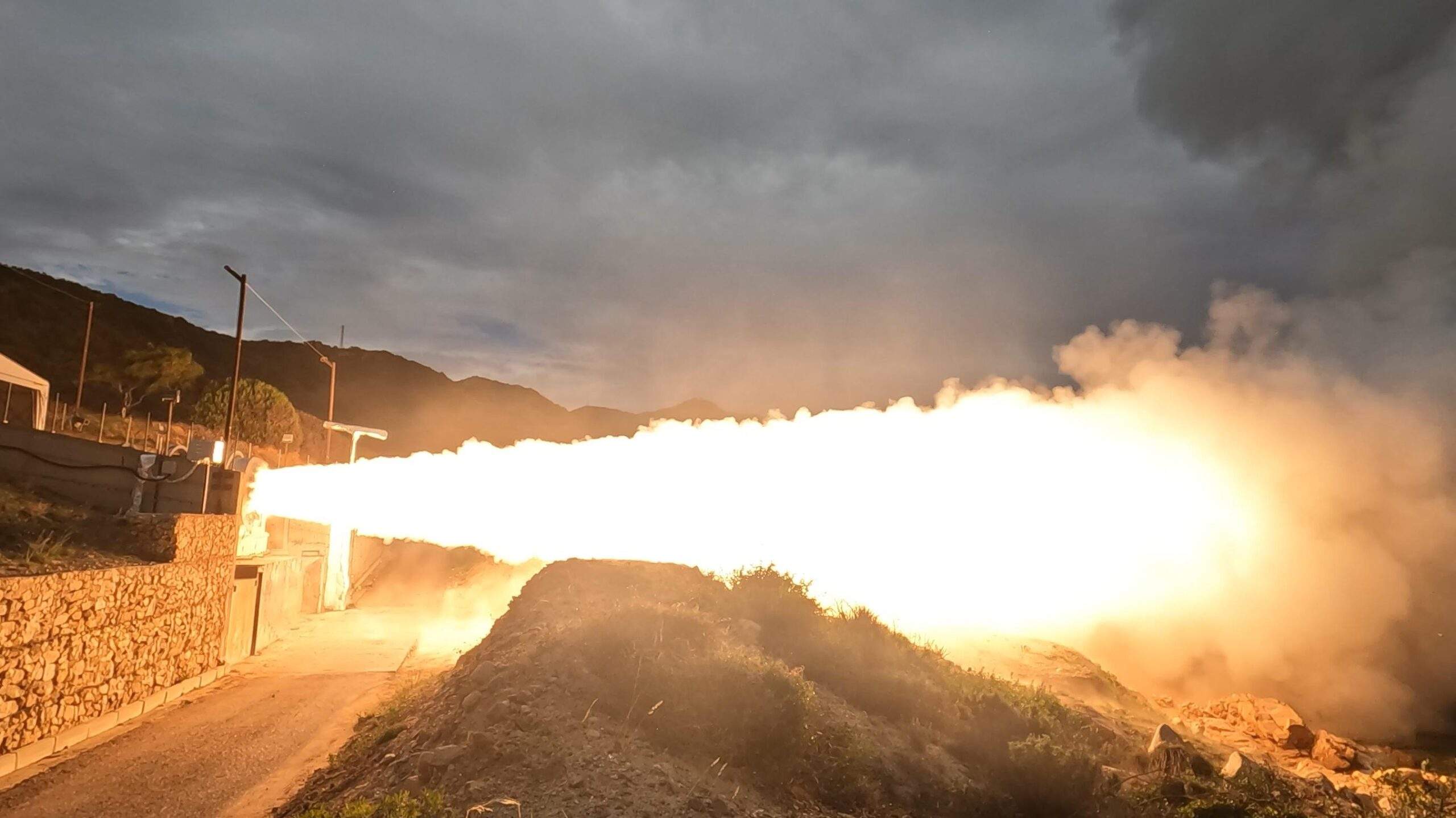
“Between 2022 and 2025, Novaeka underwent a significant transformation, evolving from a pure engineering company to a design company and subsequently a prime contractor, capable of managing the entire design scope,” Moro stated. “This expansion occurred in various contexts, including collaborations with Avio and other entities like The Exploration Company in France. In 2024 and 2025, we also began operating as a general contractor for the construction aspects.”
This evolution is crucial. In the European space industry, particularly in propulsion, the primary bottleneck isn’t just designing an engine, turbopump, or combustion chamber; it’s having the capacity to test them safely and effectively. This requires specialized, secure infrastructure compatible with cryogenic propellants or high-pressure systems, equipped for data acquisition and capable of supporting repeated testing campaigns. Currently, in Italy, a significant facility for such tests is primarily located in Sardinia.
Europe faces a deficit in testing infrastructure for engines and propulsion systems, and Novaeka is actively contributing to building this capability.
“Novaeka’s core historical business stems from rocket engine test facilities. Today, we are the only Italian company specialized in this sector and one of the very few in Europe, aside from facilities like DLR, capable of designing such infrastructures,” Moro explained. “Consequently, many European propulsion players, including The Exploration Company, ArianeGroup, and Germany’s i-Impulse, rely on Novaeka.”
Alongside test facilities, a second business line has emerged in recent years: launch structures. This involves Ground Proximity Means (GPM) – the infrastructure that supports a launch vehicle from integration through to the launch pad, including handling, fueling, and preparation for launch. This area is increasingly vital, especially for the European market of small and medium-sized launchers.

“Meanwhile, leveraging our experience with Avio and other industrial partners, we’ve developed expertise in launch structures, encompassing all Ground Proximity Means (GPM) facilities that support the launch vehicle up to the launch pad,” Moro added.
What test infrastructures has Novaeka recently worked on?
“Rather than working on existing infrastructure, we have often designed and built many of these facilities ourselves,” Moro stated. “While DLR’s facilities remain the primary European hub for rocket engine testing, representing a Franco-German effort, a significant portion of new European propulsion infrastructure is now designed or developed by Novaeka. We have worked in Sardinia, Colleferro, Spain, France (particularly in the Bordeaux area), and are currently designing for i-Impulse in Germany.”
Has this experience led to a proprietary product?
“Yes, this experience has led to our proprietary product: a portable test facility capable of handling up to 10 tons of thrust, designed for testing subsystems, turbopumps, combustion chambers, and engines,” Moro explained. “The concept is to offer a fully modular, transportable structure that can be installed without permanent civil works. It can be transported by truck or train, rapidly deployed, and operated using advanced data acquisition and analysis software. Ten tons of thrust is substantial, suitable for applications like third stages of launch vehicles or various small propulsion systems.”

How has the market responded to this offering?
“Initially, we developed this proposal for the European market, but we didn’t find significant traction as many European companies preferred to build their own proprietary structures. In the United States, however, the response was dramatically different,” Moro said. “When we presented our solutions in Colorado Springs during an industry event, the American market reacted with immediate and strong interest. By April, we had opened our U.S. office in Houston by August 2025.”
The establishment of the Houston office is a direct consequence of this interest. For Novaeka, the United States represents not only a larger market but also an ecosystem that more readily adopts modular and commercial infrastructural solutions. This is a significant step for an Italian company operating in a highly technical niche but successfully tapping into growing international demand.
What are Novaeka’s primary business lines today?
“To summarize, Novaeka currently operates across three major business lines: test facilities for rocket engines (liquid, solid, or ramjet), launch structures, and flight components,” Moro stated. “These three areas allow us to be present in both the ground and flight segments. The flight component sector is particularly interesting due to a significant scarcity of companies capable of developing certified flight components. It’s an extremely complex field, but precisely for that reason, it’s strategic.”
This move into flight components is perhaps the most compelling aspect of Novaeka’s trajectory. The company is not confining itself to ground-based infrastructure but is also venturing into the flight segment, focusing on components destined for actual rockets. This transition is challenging, demanding stringent certifications, more rigorous industrial processes, and a higher level of reliability. However, it also addresses a critical need within the European supply chain for specialized players.
Looking ahead, which aspect of space development excites you the most?
“I am deeply passionate about this sector, and I believe this passion will endure throughout my life,” Moro shared. “One of the programs that excites me the most is Artemis. I was profoundly struck by Artemis II, and in general, I am moved by the humanity that astronauts bring to such complex missions.
The Artemis program is vital because it aims to return humans to the Moon sustainably and continuously. It’s not just about exploration; it’s about developing technologies, expertise, applications, and knowledge that ultimately benefit life on Earth. All of this fosters innovation, fuels dreams and passions, and creates tools that enable humanity not only to venture beyond our planet but also to understand it better.”