

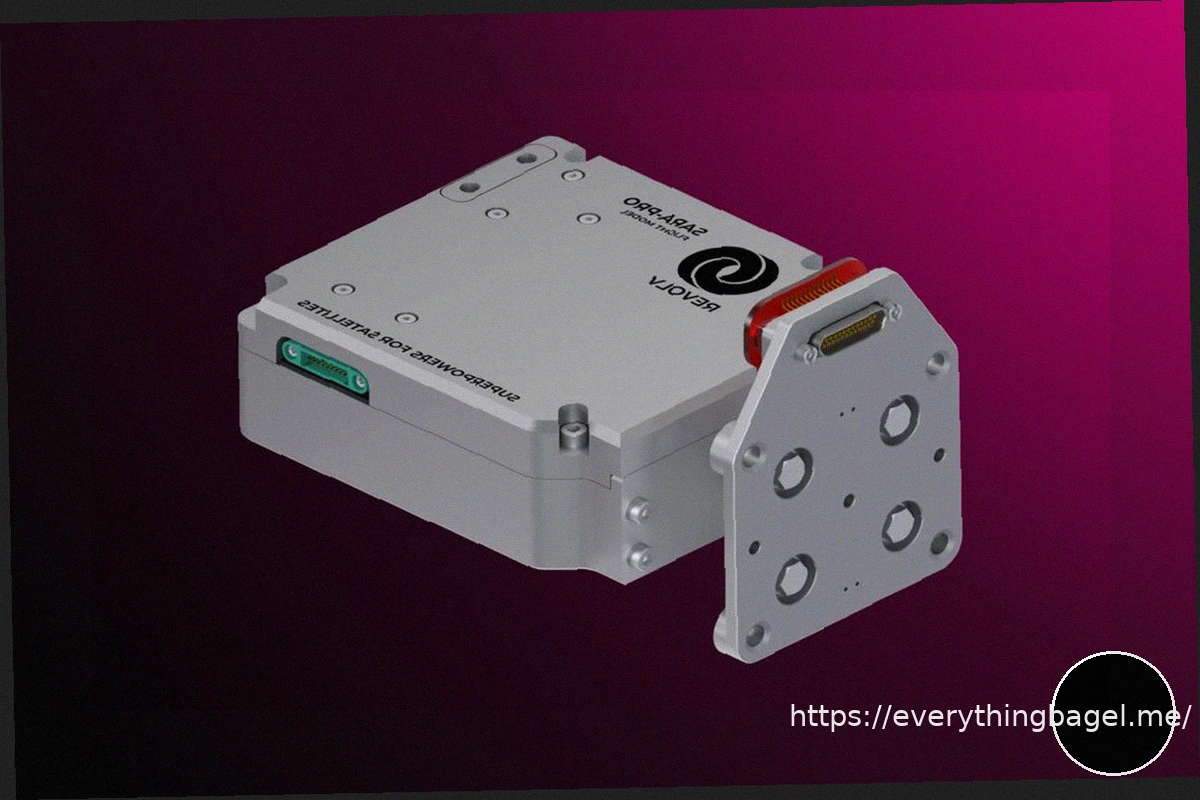
Revolv Space, an Italian company based in Turin specializing in satellite power generation systems and mechanisms, has been chosen by Infinite Orbits to supply its Solar Array Drive Assemblies (SADA) for a new series of geostationary orbit (GEO) servicing vehicles. The agreement, signed on May 27, 2026, signifies Revolv Space’s debut in the GEO market and in-orbit servicing missions.
Infinite Orbits, headquartered in Toulouse, is developing satellites dedicated to servicing operations in GEO, an orbit situated approximately 36,000 km from Earth and primarily used by telecommunication satellites. In this environment, operational conditions are more demanding than in low Earth orbit; satellites must withstand higher radiation levels and ensure continuous power during autonomous maneuvers and proximity operations.
For these missions, Revolv Space will provide an advanced version of its SADA system, named SARA Pro. This device allows solar panels to constantly orient themselves towards the Sun, thereby increasing the amount of energy available for the satellite.
The contract encompasses both engineering and flight models of the system, as well as a complete qualification campaign for GEO missions. Revolv Space will conduct vibrational, thermal, and electromagnetic tests to verify the device’s performance under the expected operational conditions. The agreement may also pave the way for future collaborations between the two companies on additional orbital servicing missions.
A Step Towards the Orbital Servicing Market
The agreement with Infinite Orbits represents a significant advancement for Revolv Space, which was founded in the Netherlands and now operates between Delft and Turin. Previously, the company had primarily focused its activities on the small satellite sector in low Earth orbit (LEO), where it has already deployed over 20 of its systems through various commercial missions.
The new SARA Pro system is developed from the experience gained with SARA Nano, a version already tested in orbit during a demonstrative mission concluded in early 2025. To adapt the system for geostationary orbit, Revolv Space conducted further tests to confirm the electronics’ resistance to the high radiation levels present in GEO.
In orbital servicing missions, continuous electrical power supply is crucial. Satellites must perform autonomous maneuvers in close proximity to other spacecraft, and any power interruption could lead to problems during these operations. SADA systems enable the solar panels to constantly track the Sun, increasing the energy available for the satellite throughout the mission.