

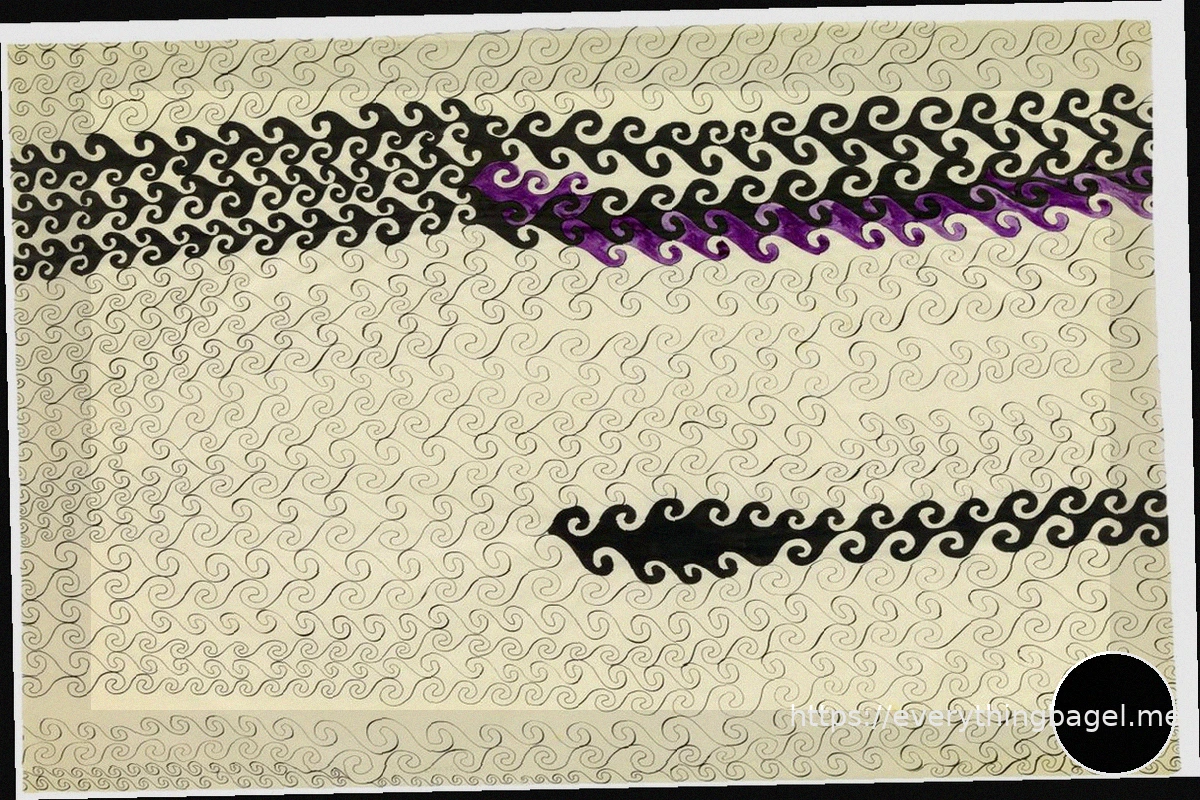
The year 2026 marks the centenary of the birth in California of Ruth Asawa, a sculptor renowned for her work with simple lines and materials, creating pieces deeply intertwined with her own life and those close to her.
Born into a large Japanese immigrant family, Asawa’s heritage significantly shaped her life and artistic output. During World War II (1942), she and her family were forcibly interned for two years in a detention camp for Japanese Americans in the United States. Despite the harsh conditions, it was here that Asawa’s creative impulses began to awaken. She keenly observed the surrounding nature and the intricate lines that seemed to define everything, elements that would later inspire her iconic suspended sculptures. Notably, her early artistic education in the camp came from former illustrators who had worked for Walt Disney studios.
After the war ended, Asawa gained her freedom and, in 1946, enrolled at Black Mountain College. This highly unconventional art school didn’t confer degrees but instead fostered a unique sensory perception and a strong sense of commitment and community. In this open, natural setting, Asawa was able to delve deeper into her artistic interests, exploring paths that often involved minimalist approaches. These were formative years; she later credited Josef Albers with teaching her how to see.
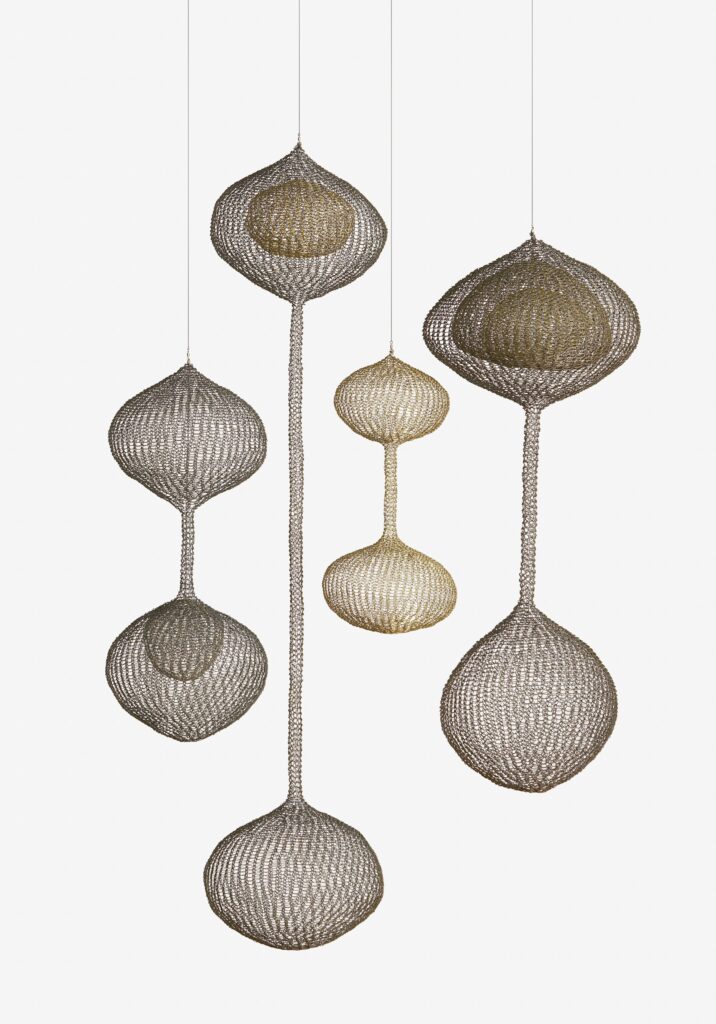
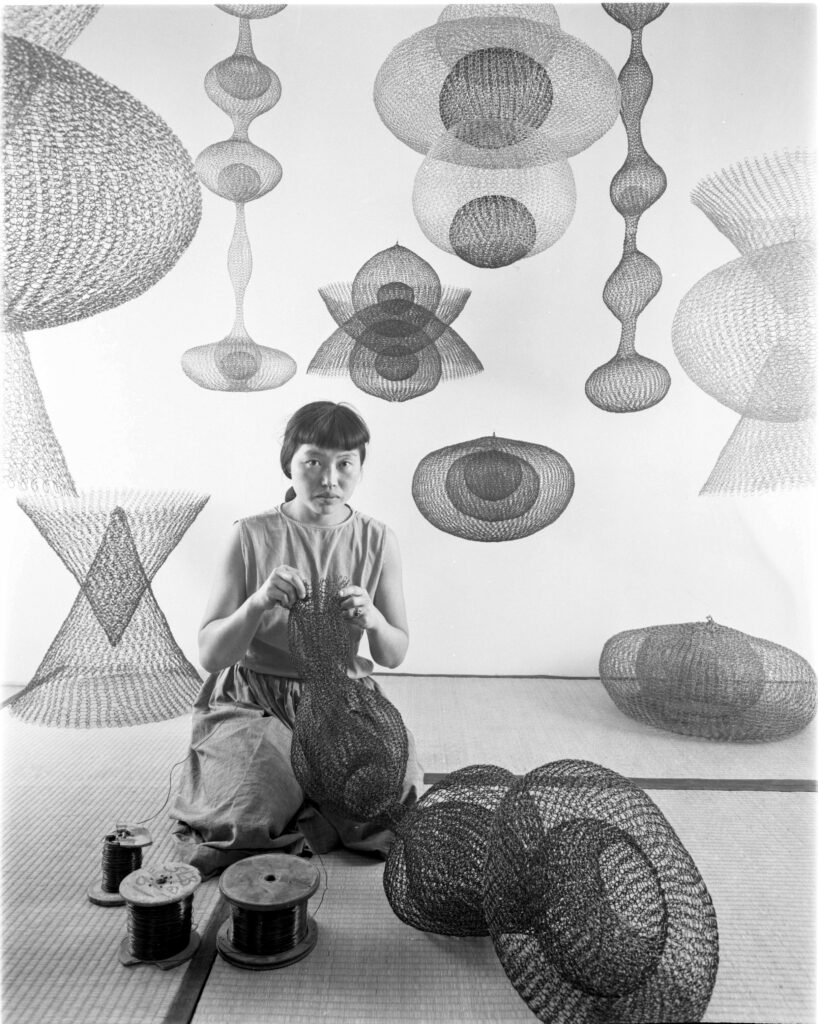
Not long after, Asawa encountered Mexican craftsmanship from Toluca, particularly captivated by wire baskets. This discovery marked a pivotal moment, as wire subsequently became the core material for her creations. She wove, twisted, and knotted it, drawing inspiration from natural landscape forms and her personal aspiration for lightness and fluidity.
Her works, characterized by a succession of curved lines, became known as loop sculptures. When illuminated, these pieces cast intricate shadows on walls, appearing like suspended lanterns yet often evoking the form of a womb. Asawa, a mother of six, consistently integrated her life experiences into her creative process, never intending to separate the two.
Initially, her use of wire, domestic allusions, and connection to motherhood contributed to her work being overlooked by critics, who often dismissed it as overly ‘feminine.’ However, Asawa remained undeterred, choosing to combine her artistic practice with education. She developed art education programs for underprivileged children and established the center that, in 1982, evolved into the San Francisco Public School of Art, which now bears her name.
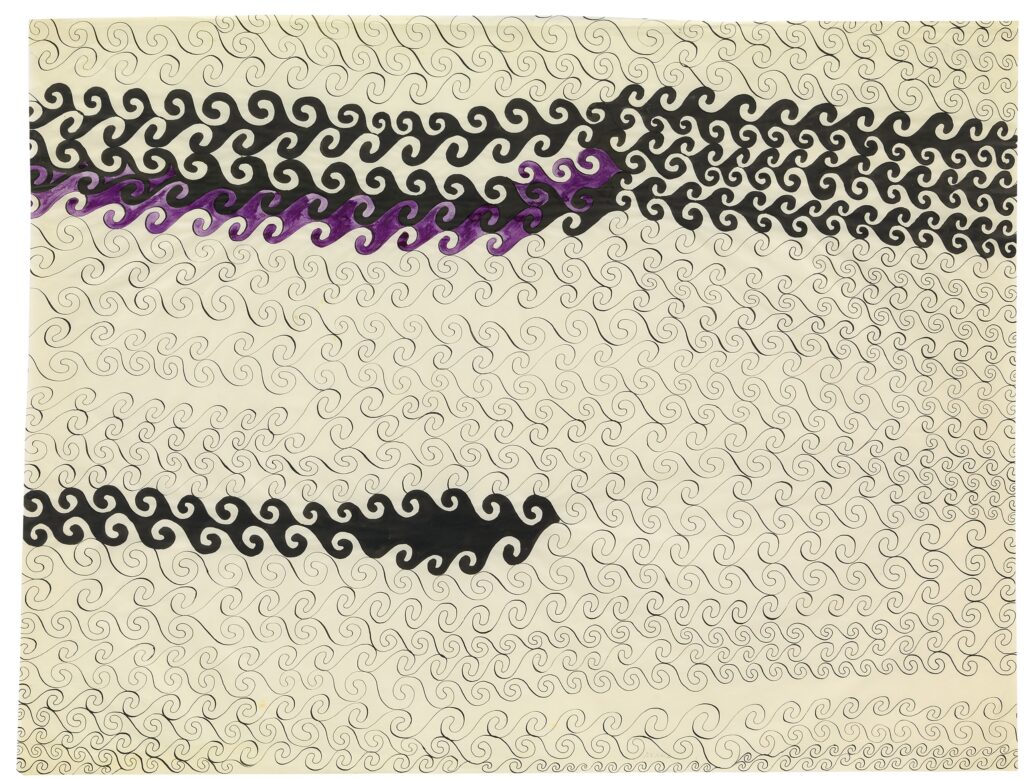
Asawa’s first comprehensive museum retrospective recently opened at the Guggenheim Museum Bilbao, following a successful run at MoMA in New York a few months prior. This exhibition appropriately commemorates the centenary of her birth. Housed within Gehry’s iconic building, it showcases wire sculptures, bronze castings, paintings, and an extensive collection of works on paper spanning her sixty-year career. The art is complemented by rich archival material, primarily focusing on her public commissions—including a monument in San Jose dedicated to Japanese Americans interned during the war—as well as the communal aspects of her legacy and her fervent advocacy for creativity throughout her career.
The exhibition, organized in collaboration with the San Francisco Museum of Modern Art—its initial venue, with the Fondation Beyeler in Basel to follow—was curated by Cara Manes, Janet Bishop, and Geaninne Gutiérrez-Guimarães. It follows a flexible chronological order, interspersed with thematic sections that dissect the artist’s inspirations and methods.
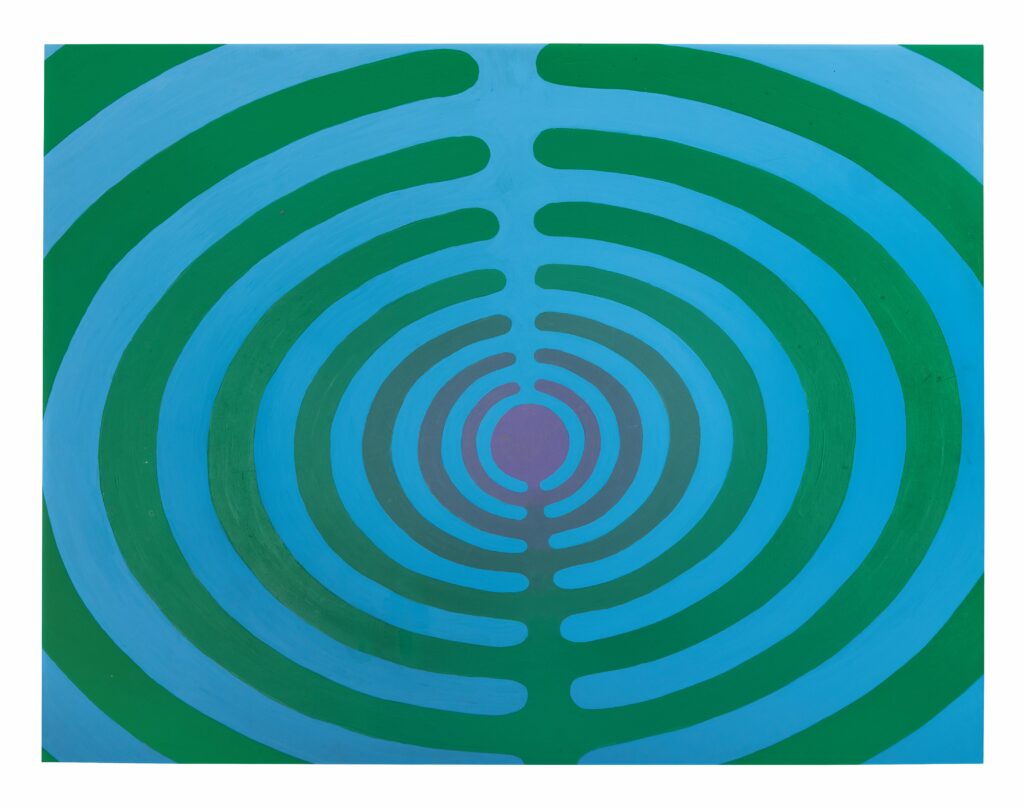
The exhibition’s journey, structured into ten sections, begins with a selection of works from Asawa’s time at Black Mountain College. These include her explorations of materials, colors, and forms in drawings, collages, and prints—even featuring collaborations with Merce Cunningham and Elizabeth Smith Jennerjahn. The narrative then moves to her wire and paper work in San Francisco, where she actively championed the establishment of a cohesive social community.
In San Francisco, she developed the key motifs and forms for her signature looped structures, meticulously crafted by hand using layers, undulations, cascades, and interweaving techniques. These allowed her to enclose volumes while remaining open to their surroundings. Concurrently, she expanded her repertoire of drawing, printmaking, and paper-folding techniques, undertook various commercial design commissions, collaborated with Vogue, and regularly exhibited at the Peridot Gallery in New York.
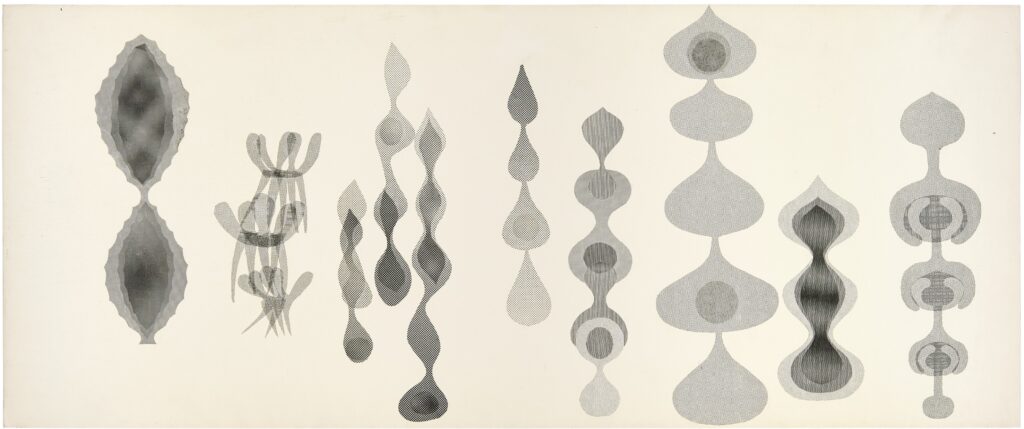
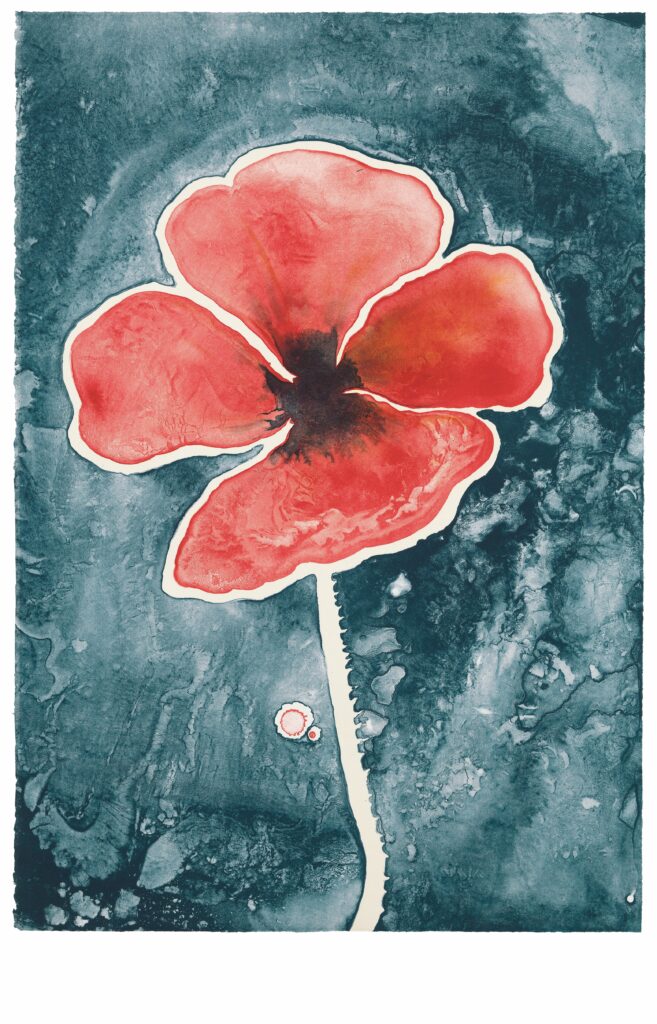
In the early 1960s, Asawa pioneered a new method for working with wire, binding and extending it to evoke organic, delicately botanical arrangements. She continued experimenting with these natural forms during a 1965 residency at the Tamarind Lithography Workshop in Los Angeles, producing a portfolio of diverse prints that were both rigorously detailed and innovative.
A selection of compositions from this portfolio, sourced from MoMA’s collection, is featured in the current exhibition, with many being shown to the public for the first time. Of particular note is a delicate depiction of a poppy, California’s state flower. It’s important to recall that during this period, printmaking and craftsmanship were often relegated to secondary status compared to painting or sculpture; Asawa, however, consistently transcended such categorizations.
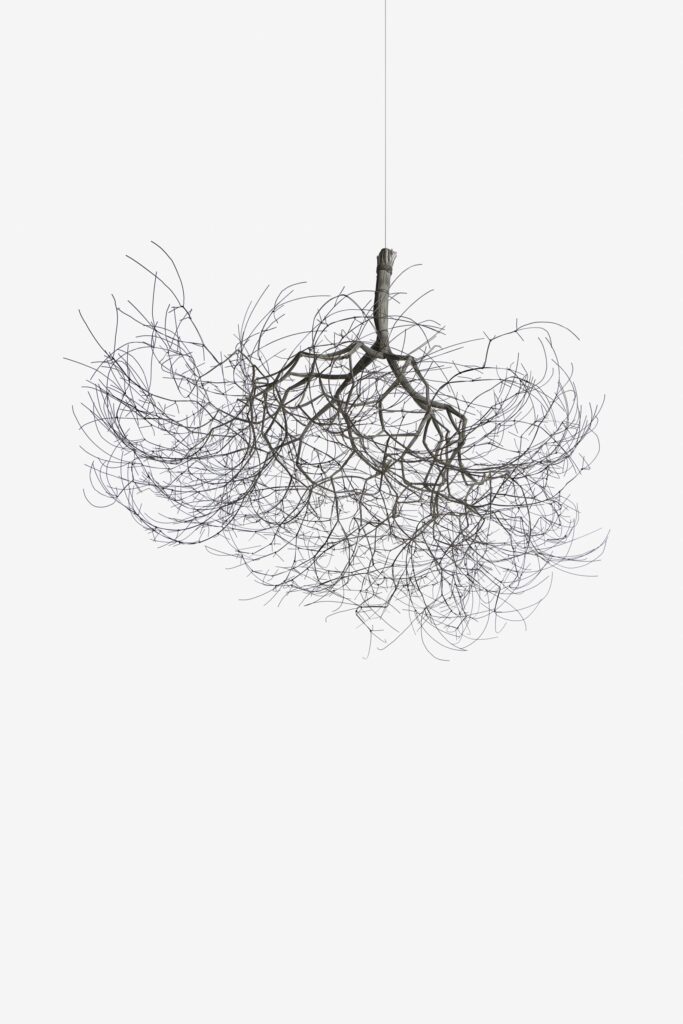
A new chapter began in 1962 when Asawa received a dried plant from the Death Valley desert as a gift. Finding it too intricate to draw, she turned to wire, beginning to craft complex branches and other botanical forms. This allowed her to transform a seemingly impersonal and rigid material into something soft and warm, a metamorphosis she deeply cherished.
While continuing her signature looped, tied, suspended, or hanging wire creations, Asawa also incorporated resin and colored glass into her work. She further expanded the venues for her art by accepting public commissions, where she explored the concept of ‘making a sculpture that everyone could enjoy,’ often through collaborative efforts.
Her first outdoor commission was the bronze fountain Andrea (1968), located in San Francisco’s Ghirardelli Square, overlooking the sea. This sculpture features two mermaids, one holding a baby, surrounded by frogs and turtles. Asawa cast a looped wire form in bronze for this piece, and its preparatory study is currently on display at the Guggenheim.
Other significant large-scale works include her Origami Fountains (1975-1976) for the pedestrian walkway in San Francisco’s Japantown, and the large commemorative monument for Japanese American internment (1994).
As her health declined, Asawa focused much of her production on botanical drawings, ranging from highly realistic to abstract. These depicted gifted bouquets or the natural world around her. She also created facial casts of family, friends, and colleagues, meticulously documenting those who frequented her Noe Valley home—underscoring her unwavering belief that life and work should never be separated. Her San Francisco home was a hub of artistic activity; its walls displayed her own creations alongside works by friends like Josef Albers and ceramics by Marguerite Wildenhain.
Asawa was tirelessly productive: she sketched and drew her home’s surroundings, coiled and tied wire in preparation for future sculptures, folded paper for origami, and hosted artists, educators, and cultural advocates to collaborate on new projects.
Visitors to the Guggenheim will discover in Asawa an artist who disregarded the conventional boundaries between figure and ground, exterior and interior, or where the figurative ends and the abstract begins. For her, what mattered were the relationships that could be articulated between elements of diverse origin and appearance, and between these elements and space itself. As she once observed, “Forms continue inside other forms, which are simultaneously inside and outside.”
While some of her wire compositions may have originated from stars, flowers, or geometric motifs, as they developed in her hands, they acquired designs that Asawa felt the material demanded. These designs often mirrored the growth patterns found in nature, reflecting her observations from the internment camp, Black Mountain College, and her own home.
Exhibition Information:
Title: Ruth Asawa: Retrospective
Venue: Guggenheim Museum Bilbao
Address: Avenida Abandoibarra, 2, Bilbao
Dates: March 19 to September 13, 2026