

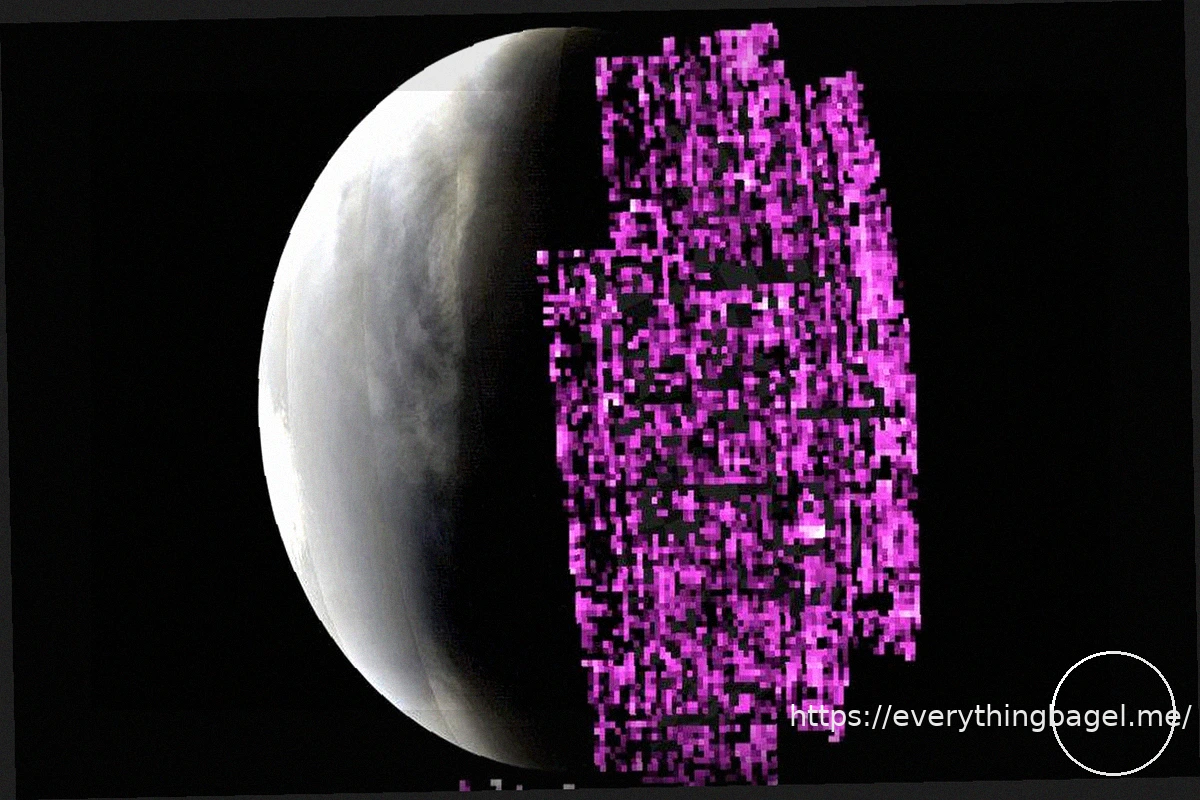
On June 3, 2026, NASA officially declared the end of the MAVEN (Mars Atmosphere and Volatile Evolution) mission, one of the most significant scientific endeavors dedicated to studying Mars in recent years. After more than 11 years in orbit around the Red Planet, the agency confirmed that the probe is no longer recoverable and will not be able to resume scientific or communication operations.
The last contact with MAVEN was on December 6, 2025, when the probe lost its signal after passing behind Mars relative to Earth. Prior to this event, all systems were functioning normally. Subsequent analyses conducted through the Deep Space Network (DSN) identified telemetry fragments indicating an anomalous situation: the probe had entered a safe mode and was rotating at an unusually high speed.
According to preliminary conclusions from the review team established by NASA, this rotation likely caused the gradual depletion of onboard batteries, leading to the shutdown of the communication system. Under these conditions, despite numerous attempts over the months, it has no longer been possible to re-establish a connection. Investigations into the original causes of the anomaly will continue in the coming months, but for the agency, the mission is considered terminated.
The loss of MAVEN marks the end of a mission that surpassed its initially planned operational duration by over 10 years. Launched in November 2013 and arriving at Mars in September 2014, the probe was designed to operate for only one Martian year. Throughout its operational life, it became one of the most important tools for understanding how the planet lost a significant portion of its atmosphere and, with it, the conditions that might have once supported liquid water on its surface.
Eleven Years to Understand How Mars Became a Desert
MAVEN was the first mission entirely dedicated to the study of Mars’ upper atmosphere, ionosphere, and the interactions between the planet and the Sun. The primary objective was to understand the mechanisms that, over billions of years, led Mars to transform from a potentially habitable environment into the cold, arid world observed today.
Among the most important results obtained by the mission is the demonstration that solar wind and solar storms significantly accelerate atmospheric loss. MAVEN directly observed how energetic particles from the Sun interact with the outermost layers of the Martian atmosphere, contributing to the dispersal of gases into space.
The probe also discovered new types of Martian auroras, observed in regions much more extensive than those on Earth, and provided the first direct confirmation of atmospheric sputtering, a process through which energetic particles expel atoms and molecules from the planet’s atmosphere.

The collected data also allowed for the study of the effects of large global dust storms, demonstrating that these events can transport water vapor to high altitudes and facilitate water loss into space. Overall, the mission has produced over 800 scientific publications and will continue to provide data to researchers for many years.
In addition to its scientific activities, MAVEN played a fundamental role in NASA’s Martian telecommunications network, acting as a radio bridge for sending data collected by surface rovers back to Earth.
The Future of NASA’s Martian Exploration
Currently, NASA continues to operate several missions in the Martian system, starting with the Mars Reconnaissance Orbiter, in orbit since 2006 and still crucial for scientific observations and telecommunications. This is joined by the Odyssey probe, active since 2001 and holding the record for longevity around Mars, and the ESA orbiter ExoMars Trace Gas Orbiter, which also collaborates in data relay activities, with NASA’s participation. On the planet’s surface, the Curiosity and Perseverance rovers continue their operations.
With the Mars Sample Return program facing cancellation, NASA currently has no missions ready to send to Mars. Last year, ESCAPADE was launched aboard New Glenn, outside the launch window for Mars; indeed, the probe is currently in space and will depart for the Red Planet in the fall of this year. The probe will be tasked with studying Mars’ atmosphere and how the solar wind interacts with it and disperses it into space, thus it will be a kind of successor to MAVEN.
On March 24, during the “Ignition” event, NASA announced the Space Reactor-1 Freedom mission, the first nuclear electric propulsion mission to Mars, which it aims to launch by the end of 2028. On board would be drones from the Skyfall mission, led by NASA’s JPL. However, all of this is still in the design phase.
NASA Concludes MAVEN Mission: A Look Back and Forward
NASA has officially announced the end of its MAVEN mission, a critical endeavor focused on understanding the Martian atmosphere. After over 11 years of operations, the probe, which began its journey in November 2013, is no longer able to communicate or perform scientific tasks. The final signal loss occurred in December 2025, with subsequent analysis suggesting the probe entered an unrecoverable safe mode, leading to battery depletion and communication failure.
MAVEN’s extended mission significantly surpassed its initial one-year design. Its primary goal was to unravel the mysteries behind Mars’ atmospheric loss, shedding light on how the planet transformed from a potentially habitable world to its current arid state. The mission provided invaluable insights into the planet’s upper atmosphere, ionosphere, and its interactions with the Sun.
Key findings from MAVEN include the direct observation of how solar wind and storms accelerate atmospheric escape. The probe also discovered extensive Martian auroras and confirmed the process of atmospheric sputtering. Furthermore, MAVEN studied the impact of global dust storms on water vapor distribution and its subsequent loss into space. The mission’s data has been instrumental in over 800 scientific publications and continues to be a vital resource for planetary scientists.
Beyond its scientific contributions, MAVEN also served as a crucial communication relay for surface assets like NASA’s rovers. As NASA looks to the future of Mars exploration, several missions remain active, including the Mars Reconnaissance Orbiter and Odyssey. The ESA’s ExoMars Trace Gas Orbiter also plays a role in data relay.
While the Mars Sample Return program faces challenges, NASA is preparing for new missions. The ESCAPADE probe, launched last year, is set to depart for Mars this autumn and will study the Martian atmosphere, effectively succeeding MAVEN. Additionally, plans are underway for the Space Reactor-1 Freedom mission, a nuclear electric propulsion initiative targeting a late 2028 launch, which could include the Skyfall drones for aerial exploration.