

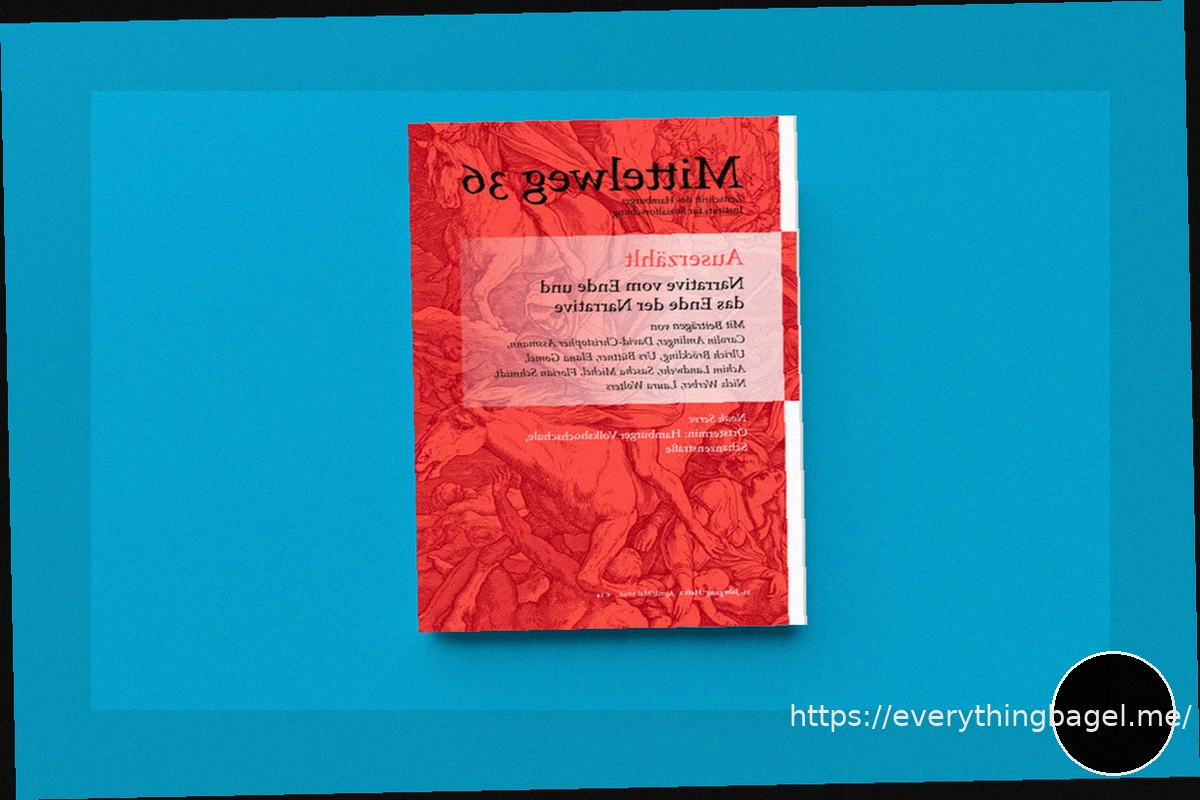
The concept of a “narrative apocalypse” describes a contemporary landscape where stories about the end of the world are not just prevalent but seem to be replacing traditional forms of narrative. This phenomenon suggests a shift where storytelling increasingly morphs into story-selling. In this environment, the emphasis is less on intricate plot development or character arcs, and more on the immediate impact and marketability of the narrative. End-times scenarios, with their inherent drama and clear stakes, prove particularly effective for this purpose.
Interestingly, this trend finds a curious parallel in the realm of zombie fiction. Such narratives can be interpreted as particularly resonant for those familiar with post-structuralist philosophy, particularly the ideas of thinkers like Jacques Derrida. The seemingly endless, consuming, and chaotic nature of a zombie outbreak can be seen as a metaphor for deconstruction – the dismantling of established structures and meanings. The breakdown of order, the relentless pursuit, and the questioning of what constitutes humanity in the face of overwhelming threat offer fertile ground for exploring themes of absence, differance, and the instability of presence, which are central to Derridean thought.
Ultimately, understanding the “narrative apocalypse” involves recognizing how these potent, often apocalyptic, stories serve commercial interests. It also prompts a consideration of how we might resist a teleological, or predetermined, end-point in our storytelling. Instead of accepting a singular, inevitable conclusion, there’s a call to explore more open-ended, contingent, and perhaps less commercially driven forms of narrative engagement.
English Translation:
Narrative Apocalypse: Storytelling as Story-Selling in the Modern Age
The concept of a “narrative apocalypse” describes a contemporary landscape where stories about the end of the world are not just prevalent but seem to be replacing traditional forms of narrative. This phenomenon suggests a shift where storytelling increasingly morphs into story-selling. In this environment, the emphasis is less on intricate plot development or character arcs, and more on the immediate impact and marketability of the narrative. End-times scenarios, with their inherent drama and clear stakes, prove particularly effective for this purpose.
Interestingly, this trend finds a curious parallel in the realm of zombie fiction. Such narratives can be interpreted as particularly resonant for those familiar with post-structuralist philosophy, particularly the ideas of thinkers like Jacques Derrida. The seemingly endless, consuming, and chaotic nature of a zombie outbreak can be seen as a metaphor for deconstruction – the dismantling of established structures and meanings. The breakdown of order, the relentless pursuit, and the questioning of what constitutes humanity in the face of overwhelming threat offer fertile ground for exploring themes of absence, differance, and the instability of presence, which are central to Derridean thought.
Ultimately, understanding the “narrative apocalypse” involves recognizing how these potent, often apocalyptic, stories serve commercial interests. It also prompts a consideration of how we might resist a teleological, or predetermined, end-point in our storytelling. Instead of accepting a singular, inevitable conclusion, there’s a call to explore more open-ended, contingent, and perhaps less commercially driven forms of narrative engagement.