

NASA’s NEO Surveyor space telescope, dedicated to discovering asteroids and comets that pose a potential threat to Earth, has now entered its integration and testing phase. The mission, with a planned launch no earlier than September 2027 aboard a Falcon 9 rocket, will be the first space observatory specifically designed for planetary defense through infrared observations.
In the coming weeks, various components of the telescope are being assembled and verified across different US facilities. Among these is the Space Dynamics Laboratory at Utah State University, where the telescope and its protective structure are undergoing tests designed to simulate deep space conditions.
The mission’s objective is to identify Near-Earth Objects (NEOs) – celestial bodies whose orbits can bring them close to Earth. Many of these objects are difficult to observe from Earth-based telescopes due to their darkness, small size, or apparent proximity to the Sun. Therefore, NEO Surveyor will operate in the infrared spectrum, detecting the heat emitted by Sun-warmed asteroids rather than reflected light. This technique will enable the detection of objects that are nearly invisible in traditional optical observations.
The mission will operate from the Sun-Earth Lagrangian point L1, approximately 1.5 million kilometers from our planet in the direction of the Sun. From this vantage point, the telescope will be able to continuously monitor large portions of the sky for at least five years.
Mission Components
NEO Surveyor’s primary camera utilizes two infrared detector arrays capable of producing high-resolution sky images in two different infrared bands. This will allow scientists to estimate the temperature and size of the observed objects.
One of the largest elements of the spacecraft will be the sunshade, a solar shield approximately 6 meters long. This shield will enable the telescope to observe near the Sun without being blinded by its intense light. The structure will also house the solar panels necessary to power the satellite.
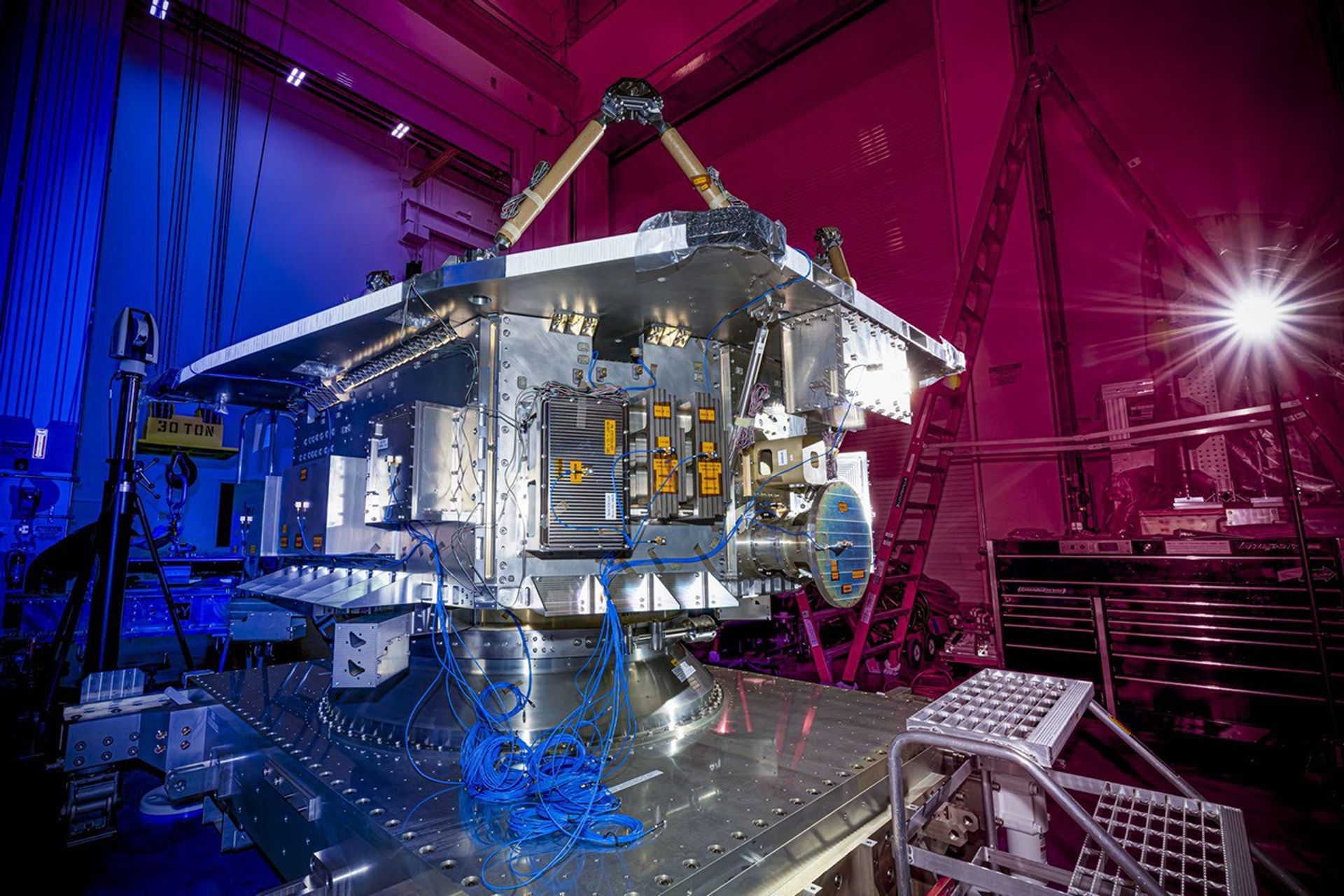
The sunshade and the satellite platform, which includes propulsion, avionics, and communication systems, are currently undergoing testing at BAE Systems in Colorado. Once these checks are complete, all elements will be integrated into the final spacecraft.
NEO Surveyor’s Role in Planetary Defense
While hardware testing is ongoing, science teams are finalizing the observational strategy and data processing systems. The collected observations will be transmitted to Earth via NASA’s Deep Space Network and processed by IPAC at Caltech. Identified objects will then be sent to the Minor Planet Center, the international body that catalogs asteroids and comets.
The data will also be utilized by the Center for Near Earth Object Studies (CNEOS) at the Jet Propulsion Laboratory, which calculates the orbits of near-Earth objects and assesses their potential future impact risk.
With NEO Surveyor, NASA aims to significantly increase the number of potentially hazardous asteroids that can be detected well in advance. The mission will also coincide with a period of rapid growth in solar system surveillance capabilities, as the Vera C. Rubin Observatory, designed for continuous sky scanning and the discovery of new asteroids and comets, is also set to become operational this year.
NEO Surveyor Telescope: A Key Tool for Planetary Defense
The NEO Surveyor space telescope, a new initiative by NASA focused on identifying asteroids and comets that could endanger Earth, has now progressed to the crucial stage of integration and testing. Slated for launch no earlier than September 2027 aboard a Falcon 9 rocket, this observatory is groundbreaking as the first space-based asset specifically engineered for planetary defense using infrared technology.
Currently, the telescope’s various components are undergoing assembly and rigorous verification across multiple research centers in the United States. At the Space Dynamics Laboratory of Utah State University, the telescope and its protective housing are being subjected to tests that accurately simulate the harsh environment of deep space.
The primary mission objective of NEO Surveyor is to detect Near-Earth Objects (NEOs), which are celestial bodies on orbital paths that could bring them into close proximity with Earth. A significant challenge in observing these objects from Earth is their often faint nature, small size, or their position near the Sun, making them difficult to spot with traditional optical telescopes. To overcome this, NEO Surveyor will leverage infrared observation. Instead of relying on reflected sunlight, it will detect the thermal radiation emitted by asteroids warmed by the Sun. This infrared capability is vital for spotting objects that would otherwise remain practically invisible to conventional optical surveys.
The telescope is positioned to operate from the Sun-Earth’s L1 Lagrange point, a stable location approximately 1.5 million kilometers from Earth on the side facing the Sun. This strategic position will afford NEO Surveyor a continuous view of vast areas of the sky for an extended operational period of at least five years.
Key Components of the Mission
The main camera of the NEO Surveyor telescope is equipped with two infrared detector arrays. These arrays are designed to capture high-resolution images of the sky across two distinct infrared wavelengths, enabling scientists to accurately estimate the temperature and dimensions of the celestial bodies they observe.
A significant structural element of the spacecraft is its sunshade. This expansive shield, measuring about 6 meters in length, is essential for allowing the telescope to observe in the vicinity of the Sun without being overwhelmed by its intense glare. This protective structure also incorporates the solar panels that will provide power to the satellite.
Currently, both the sunshade and the satellite’s main platform – encompassing its propulsion, avionics, and communication systems – are undergoing testing at BAE Systems in Colorado. Upon successful completion of these assessments, all individual components will be integrated to form the complete spacecraft.
NEO Surveyor’s Crucial Role in Planetary Defense
Concurrent with the hardware testing, scientific teams are actively developing the mission’s observational strategies and data processing protocols. The astronomical data gathered will be transmitted to Earth via NASA’s Deep Space Network and subsequently processed by the Infrared Processing and Analysis Center (IPAC) at Caltech. Any newly discovered objects will be forwarded to the Minor Planet Center, the international clearinghouse for the cataloging of asteroids and comets.
This valuable data will also be utilized by the Center for Near Earth Object Studies (CNEOS) at the Jet Propulsion Laboratory. CNEOS is responsible for calculating the orbits of near-Earth objects and assessing their potential risk of future impact with Earth.
With the deployment of NEO Surveyor, NASA aims to substantially enhance its capability to detect potentially hazardous asteroids much earlier than is currently possible. Furthermore, this mission will launch during a period of significant expansion in our solar system surveillance capabilities, as the Vera C. Rubin Observatory is also expected to commence operations this year. The Rubin Observatory is designed to conduct a comprehensive, continuous scan of the sky, further contributing to the discovery of new asteroids and comets.